
I worked at Whole Foods for 14 years from 2004 until 2018 when Amazon settled in and started making big changes. I watched it transform from a store with a genuine point of view into something more efficient, more corporate, and frankly, less interesting. The in-house vegan bakery items disappeared, prepared foods offerings became homogenized and smaller brands weren’t being promoted as much. I wrote about that transformation in detail here, but this post is about the chain that seems to have picked up what Whole Foods put down and that’s Sprouts Farmers Market.
I still shop at Whole Foods regularly and post finds from there all the time and there are things it still does well. The 365 brand offers solid value on everyday staples, the produce department remains strong at most locations, and the Amazon delivery integration can be convenient for some. If you have a Prime membership, the savings can add up. But for plant-based shoppers specifically, the in-store experience has narrowed considerably since 2018 and that’s not just my opinion, it’s sadly what the shelves tell you.
About Sprouts Farmers Market
If you’ve never been to a Sprouts Farmers Market, you’re not alone as they’re not everywhere…yet. Founded in 2002 in Chandler, Arizona by the Boney family (whose roots in produce go back to a San Diego fruit stand in 1943), Sprouts went public in 2013 and hasn’t slowed down since. It ended 2025 with 477 stores across 24 states, has 40-plus locations planned for 2026, and has a long-term target of 1,400 U.S. stores. Midwest and Northeast expansion is already in the works for 2027, with new distribution centers coming online in Florida, Colorado, and Southern California. This means the chain you might not know about could be coming soon to your area.
Sprouts is still largely concentrated in the South, Southwest, and mid-Atlantic. If you live in AK, AR, CT, HI, ID, IL, IN, IA, KY, LA, ME, MA, MI, MN, MS, MO, MT, NH, NJ, NM, ND, OH, OR, RI, SC, SD, VT, WA, WV, WI, or WY, there isn’t one near you yet. The Northeast is just starting to open up, with the first New York location now open on Long Island and I’ve heard Ohio’s first store in Columbus is in the works.
For context, Whole Foods founded in Austin in 1980 and sold to Amazon in 2017 for $13.7 billion, operates around 530 stores with roughly $18 billion in annual revenue but Sprouts is closing that gap fast. And on the things that matter most to plant-based shoppers, it might already be racing ahead.
The Small Brand Energy Whole Foods Lost
Getting a small brand into Whole Foods today often means volume commitments and marketing spend most emerging producers can’t meet. That door has mostly closed, but Sprouts may have opened a new one.
The company’s “Foraging” Program sends a dedicated team to trade shows worldwide to find what’s next. Each store features a rotating innovation center with 30 to 40 new items debuting monthly. Sprouts introduced more than 7,100 new products in 2024 and that’s roughly 35% of its entire assortment. CEO Jack Sinclair has said plainly that Sprouts has become a go-to launch destination for brands entering the market and that’s exactly the role Whole Foods often once played. I’m seeing it firsthand as I often find new products there every week and I can’t really say the same about Whole Foods anymore.
Sprouts Bakery & Prepared Foods Selections
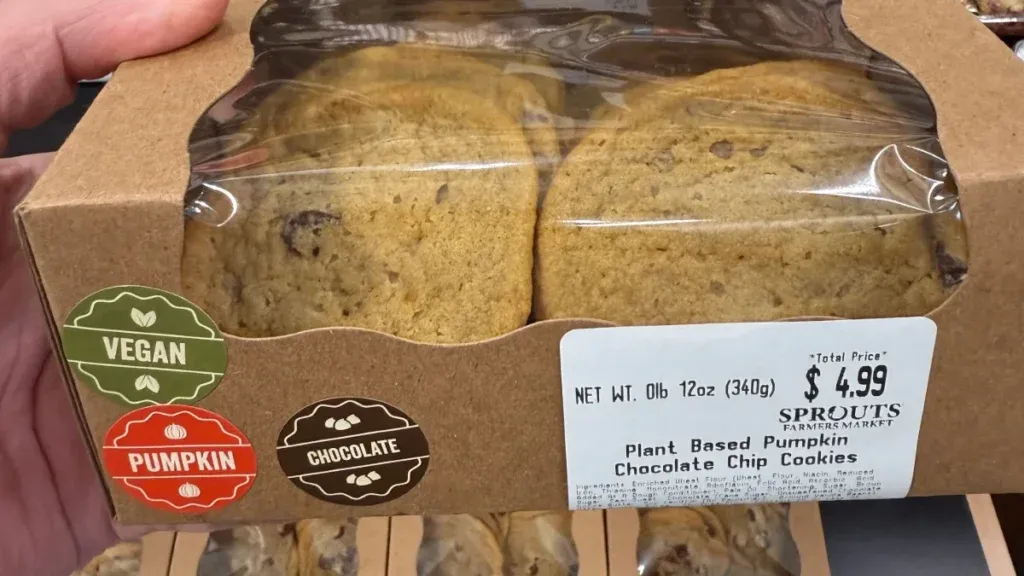
Whole Foods once had a genuinely great in-house vegan bakery with donuts, cakes, and other specialty items that signaled a real commitment to this customer base. After Amazon, that program got gutted and replaced with prepackaged alternatives that vary wildly by location and have had spotty availability at best.
Sprouts has stepped into that gap and their in-house bakery turns out plant-based muffins, cookies, and seasonal items often baked on-site, and the reputation for quality is real. Shoppers regularly call the baked goods some of the best they’ve ever had, plant-based or not. A great bakery signals what a store believes in and Whole Foods once had that zeitgeist on lock.
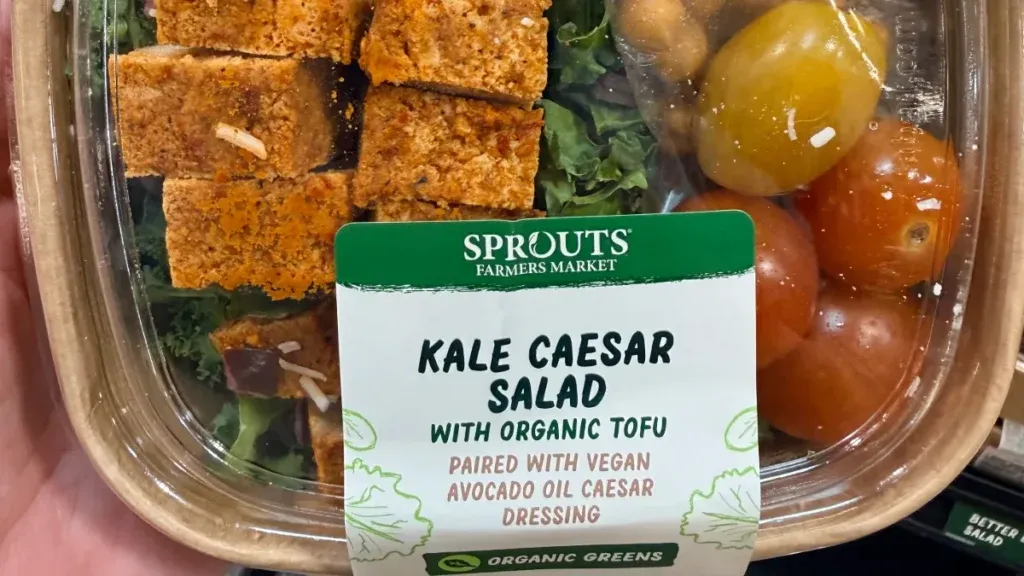
Whole Foods built a prepared foods program plant-based shoppers could rely on but since 2018 it has gone downhill significantly with smaller selections, and less creativity it seems behind them. Sprouts is moving in the opposite direction though, with a growing plant-based deli presence, holiday menus with real variety, and the feeling that someone is actually curating it and that trajectory seems to be resonating with shoppers.
Signage and their Shopping Experience
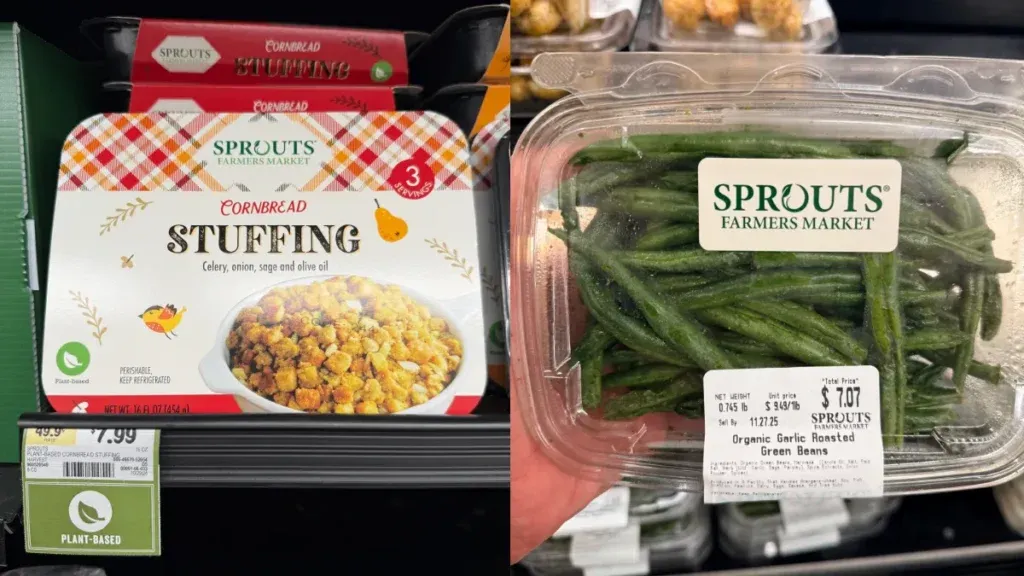
Sprouts uses green plant-based shelf tags throughout the store and keeps new arrivals grouped in visible innovation sections. It feels like a store that wants you to find things and that’s exactly how Whole Foods felt before it started feeling like a regular grocery store chain with higher prices. This isn’t accidental either. As far back as mid-2024, Sprouts CEO was on earnings calls tracking Whole Foods’ market position directly. They seem to know exactly what they’re doing.
Pricing & Value
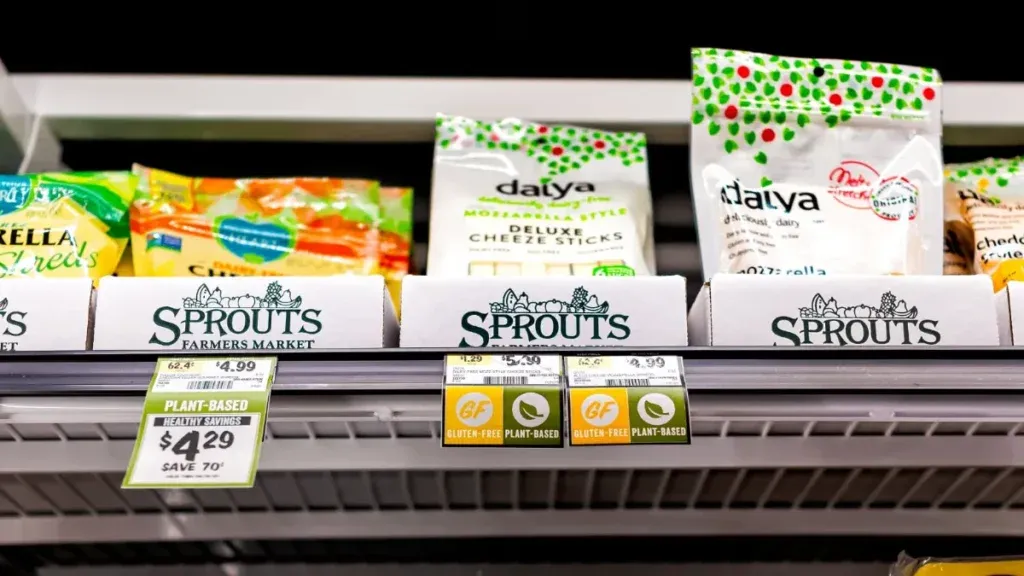
Whole Foods has improved 365 brand pricing since the Amazon acquisition, but seems to have quietly raised prices elsewhere to compensate but to be fair, they’re not the only retailer that practices this.
Sprouts runs weekly BOGOs, manager’s specials, offers in-app coupons, and has a revamped loyalty program that reportedly beat its own signup projections in 2025. The bulk section offers competitive staple pricing, and the produce is consistently cited as a strong value. It’s not a budget store by any means, but it’s built for the repeat, intentional shopper that Whole Foods used to count on and increasingly can’t retain. Sinclair has noted that customers committed to dietary choices like plant-based, vegan, non-dairy, tend to stay loyal regardless of economic conditions and Sprouts seems to be building its entire model around that reality.
Is Sprouts doing this intentionally? Absolutely, as their CEO has been publicly tracking Whole Foods’ market position for years. Are they also benefiting from Whole Foods’ own missteps? Without question. But those two things aren’t mutually exclusive. What separates Sprouts from just being an opportunist is that the substance was already there like their foraging program, the bakery, and the small brands support. Whole Foods’ decline didn’t create Sprouts, it just created the chance for more people to notice what Sprouts was already doing.
What This All Adds Up To
Whole Foods didn’t lose its mojo all at once. It happened gradually as programs were cut, smaller brands were pushed away, and they started to favor scale over discovery. That spirit didn’t disappear from natural grocery chains completely, it just moved on.
Sprouts isn’t perfect as many have noted vegan options there declining (which is a trend everywhere unfortunately), their affordability is questionable and depending on where you live it may not even be an option for you yet. But it’s expanding fast and if you have one nearby, it’s time to perhaps pay closer attention. The small brand bets, their in-house bakery, the prepared foods offerings, the bulk section worth browsing, and their foragers finding the next thing before anyone else stocks it make a compelling argument for shopping there.
So, is Sprouts the new Whole Foods? Based on what I’m seeing every week it’s a very strong maybe and it seems they’re only getting started.













Hi, great article! As an FYI, I live in Greenville, SC and we do have Sprouts. Two of them here in Greenville- one is just a couple of minutes down the road from me and way easier to get in and out of than WF. The only negative comment I have about Sprouts is that they typically only have one register open and there’s no u-scan so checkout can sometimes take an incredibly loooonnnngggg time. But you are right, they are awesome and it’s worth standing in line to shop there.