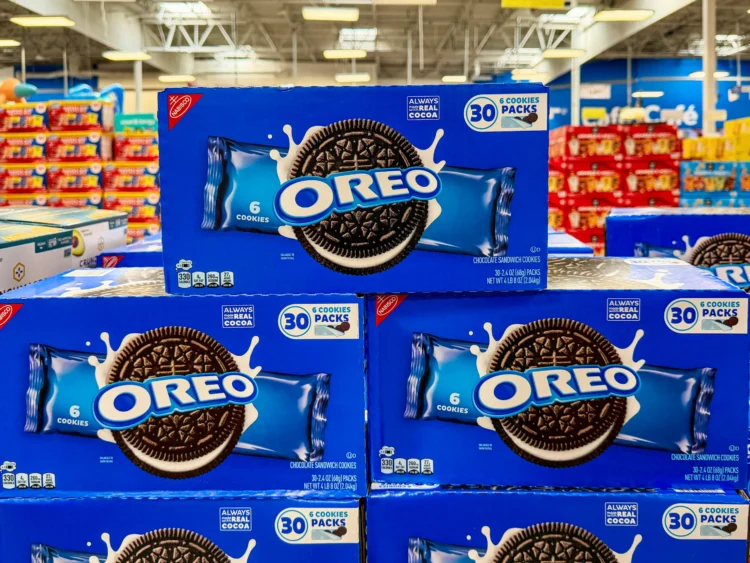
Most people assume Oreo cookies are one of the most standardized packaged foods in the world and are the same cookie, the same filling, the same recipe no matter where you buy them. But if you’ve grabbed Oreos at Costco, BJs or Sam’s Club warehouse stores and thought they tasted slightly different from the regular grocery store version, you weren’t imagining it. There are some real differences and it’s been getting talked about on social media recently so I thought I’d take a closer look.
What’s Actually Different
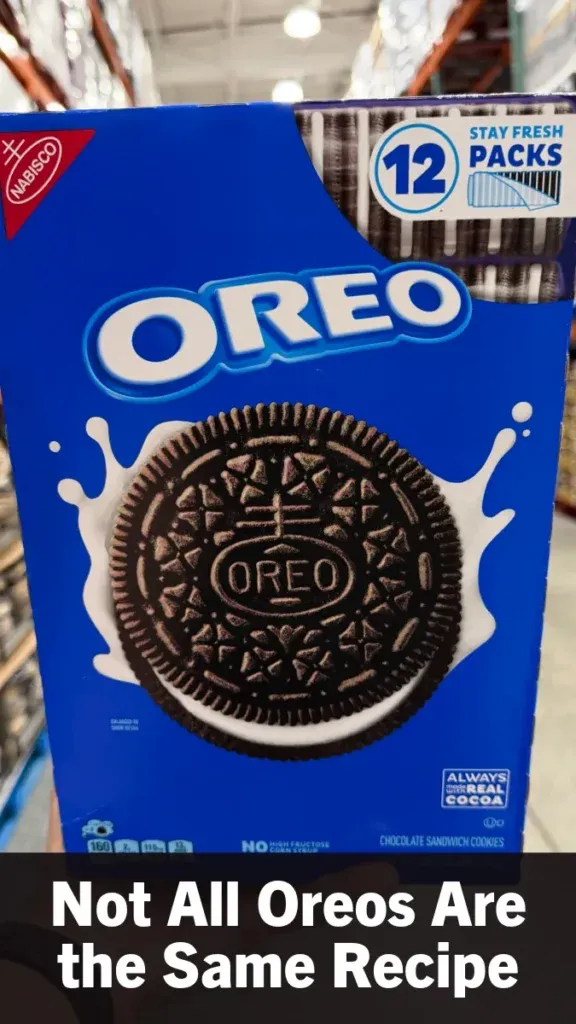
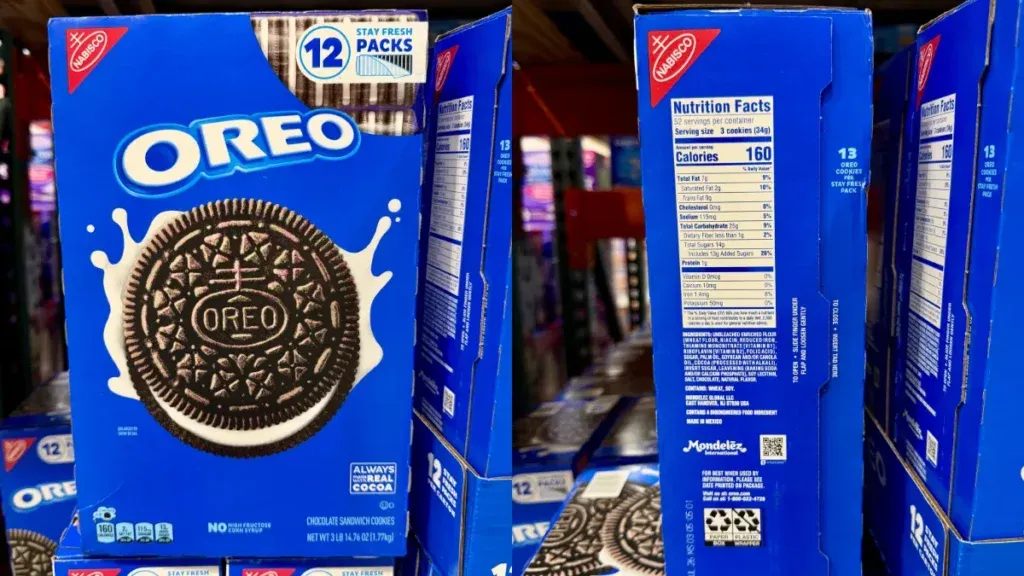
After comparing ingredient labels across multiple warehouse clubs (Costco, Sam’s and BJs), a clear pattern started to emerge where Oreo’s “Stay Fresh” sleeve packs had a different formulation than the brand’s individually wrapped snack-pack products even when both are sold in the same store. You can find this HFCS-free 12-pack format in many retailers like Walmart and Smart & Final to these warehouse clubs.
On the flip side, if you purchase the bulk boxes filled with individual snack pouches (like the 30-count boxes packed with 6-cookie sleeves found stacked on pallets at Sam’s Club and Costco, or in convenience stores or vending machines), you are likely getting the legacy recipe. That format still relies heavily on High Fructose Corn Syrup.
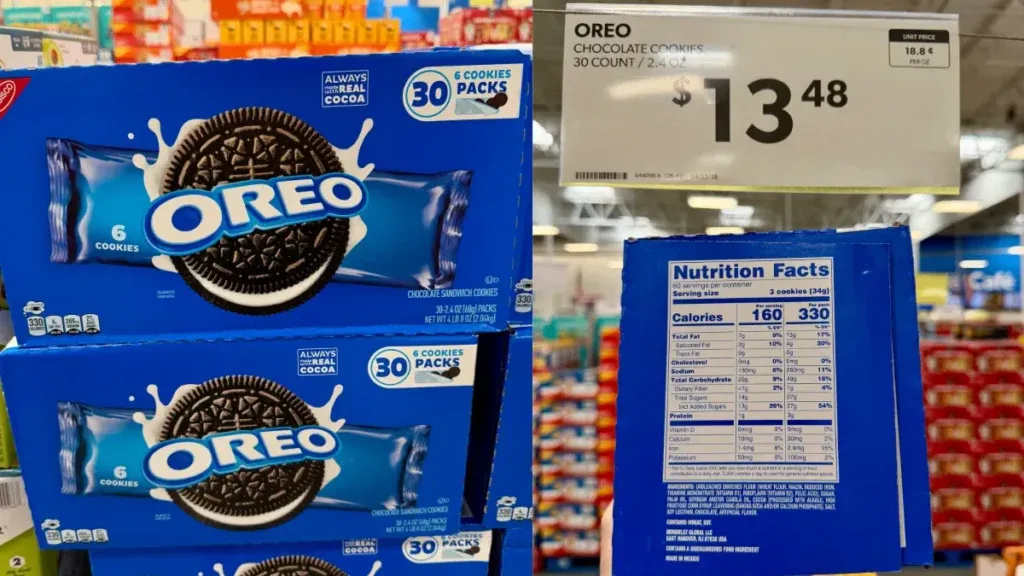
Both are liquid sweeteners, but invert sugar is composed of 50% fructose and 50% glucose, while HFCS typically runs closer to 55% fructose and 40% glucose, with a small percentage of other sugars. The flavor swap matters too as the artificial vanillin used in standard Oreos is typically synthesized from petrochemicals or wood pulp, while the natural flavor in the warehouse version is presumably derived from actual vanilla.
So Why Are They Different?
This doesn’t appear to be a secret “premium Oreo” strategy or a retailer-exclusive recipe. The more likely explanation may come down to manufacturing and packaging systems.
Different product formats run on different production lines with different machinery, moisture barriers, shelf-life targets, and distribution requirements. Sleeve-style bulk packaging and individually wrapped snack packs are fundamentally different products from a manufacturing standpoint, even if the cookies themselves appear nearly identical. That separation may allow Mondelez to maintain format-specific formulations across its Oreo product line.
The sleeve-pack version appears to follow a different formulation designed around the warehouse-club bulk format, while the snack-pack version remains optimized for portability, vending, and mass convenience distribution.
This type of SKU-level formulation split is actually more common in the packaged food industry than most consumers realize. Large brands frequently adjust ingredients based on packaging systems, shelf stability, sourcing, and production efficiency. Most shoppers simply never compare the labels closely enough to notice but notice they have on Reddit and other social platforms.
It’s worth noting that the standard family-sized boxes you see in regular grocery stores use the high-fructose corn syrup and artificial flavor recipe. The invert sugar formula appears to be for the 12-pack Stay Fresh format, which you’ll find at many warehouse clubs. So if you’re grabbing a regular pack at the grocery store, you’re likely getting the HFCS version.
Do They Taste Different?
According to some consumers, yes. The entire conversation around these Oreos largely started because people noticed differences in texture and flavor before they ever compared ingredient lists.
Across online reviews, Reddit discussions, and side-by-side taste tests, the sleeve-pack HFCS-free version is commonly described as:
- slightly less sweet
- more cocoa-forward
- crispier and more brittle
- slower to soften in milk
The snack-pack HFCS version is generally described as:
- sweeter and closer to the “classic” Oreo profile
- softer straight from the package
- and more vanilla-forward in the filling
The Ethical Questions Around the Ingredients
These are the questions that comes up every time Oreos enter the plant-based conversation, and I’ll break it down.
The ingredient list on original Oreos contains no dairy, eggs, gelatin, or other animal-derived ingredients which is why they’ve long been called “accidentally vegan” and why PETA has included them on their vegan-friendly foods list and VegNews consistently acknowledges original Oreos as vegan-friendly in its coverage. Most flavors are like this but some occasionally contain honey or confectioners glaze so always read ingredients.
The gray area that does come up usually is the use of bone char. In the U.S., some refined cane sugar is processed using bone char which is charred animal bones used as a decolorizing filter to achieve that gives sugar its white color. The sugar itself doesn’t contain bone particles, but it has come into contact with them. Large companies like Mondelēz often source sugar from multiple suppliers, making it nearly impossible to know whether the sugar in your specific package was processed this way.
It’s important to understand what bone char actually is: a processing agent, not an ingredient. It functions as a filter during refining and is removed before the sugar is used similar to how some wines use some agents that never end up in the bottle. No bone char particles end up in the cookie. Whether that distinction matters to you is a personal ethical decision, and it’s one the vegan community has debated for years.
For most vegans in practice, original Oreos are vegan by ingredients for them. And on the cruelty-free front, there’s now an additional reason to feel better about the brand overall. Earlier this year, Mondelēz, Oreo’s parent company, officially ended animal testing, a significant policy shift pushed by PETA after years of advocacy. That’s a meaningful step, and one worth recognizing. Read more about it in my news post here.
Let’s be real, invert sugar over HFCS doesn’t make these a health food and Oreos are still Oreos. But ingredient sourcing and ethical practices matter to a lot of people, and I’ll always lay out the facts so you can make your own call, whether that’s based on health, ethics, or environmental issues. My goal isn’t to police your shopping cart. Everyone balances these choices differently, but knowing exactly what is in the box and how the packaging changes the recipe is the best way to make an informed choice next time you’re navigating the aisles.