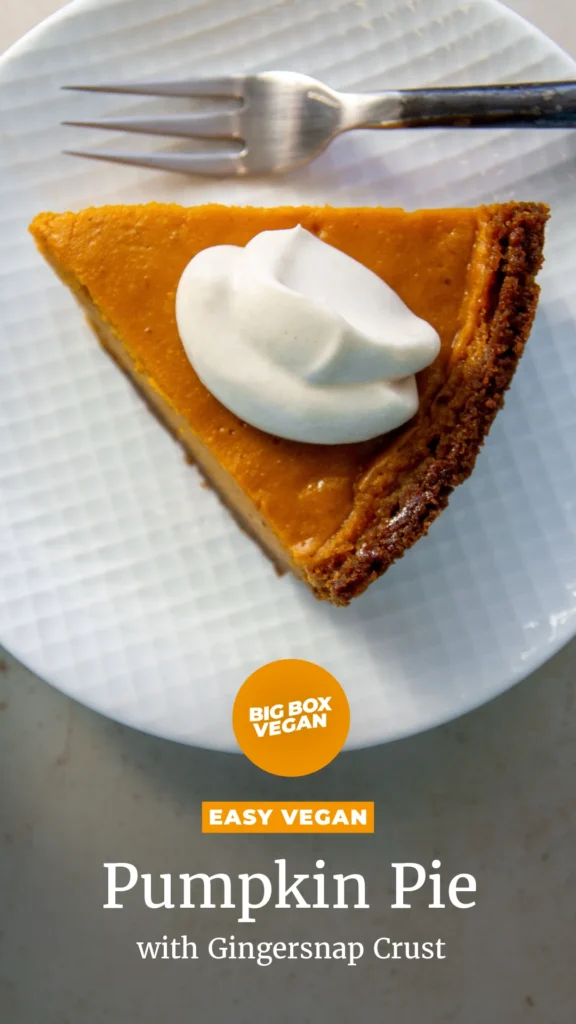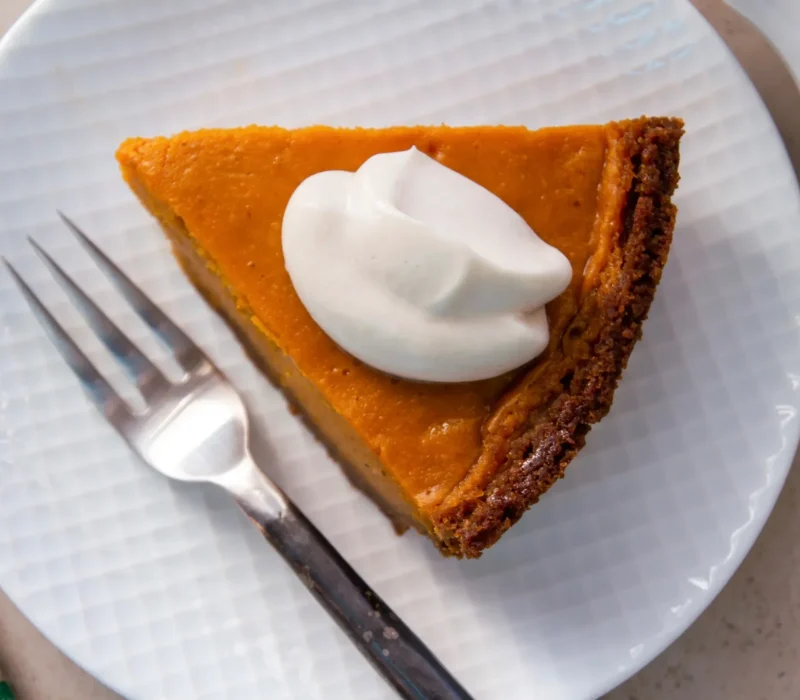
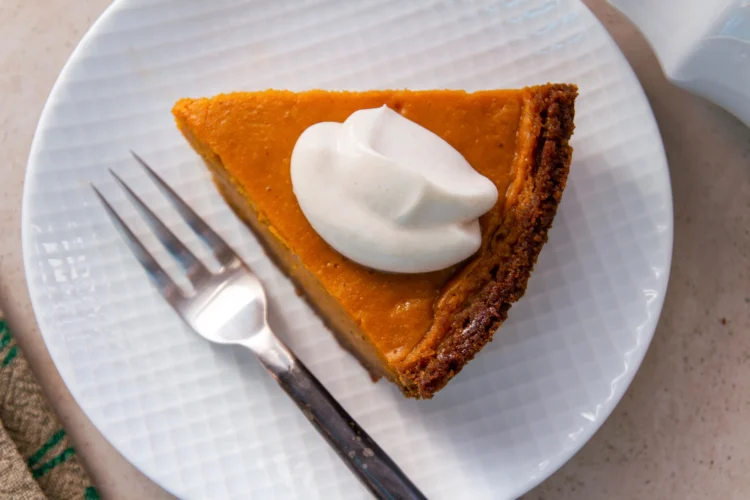
It took me years to perfect my original vegan pumpkin pie recipe, and it’s become one of the most popular and highly rated recipes on my website. While I wasn’t exactly looking to reinvent it, I recently decided to try using a canned pumpkin pie mix that has sugar and spices already added to make a pie to see if it would work well with the substitutions I developed for my vegan pumpkin pie. I used Libby’s brand which is widely considered the gold standard in the category and generally available at most stores, but there are other brands out there. I guess I felt using pie mix was a shortcut over using plain pumpkin puree and might not produce a good result. Boy, was I was wrong. The first bite transported me back to my pre-vegan days and the nostalgic feeling of how I remembered pumpkin pie tasting in Thanksgivings past washed over me. To me, the filling feels smoother but still firm, the sweetness and spice balance are perfection, and paired with my buttery two-ingredient gingersnap crust, it couldn’t be easier. I may have a new favorite, and my original vegan pumpkin pie recipe isn’t going anywhere, but this easier version has definitely earned a place at my Thanksgiving table!
Pumpkin Pie Mix vs. Pumpkin Purée
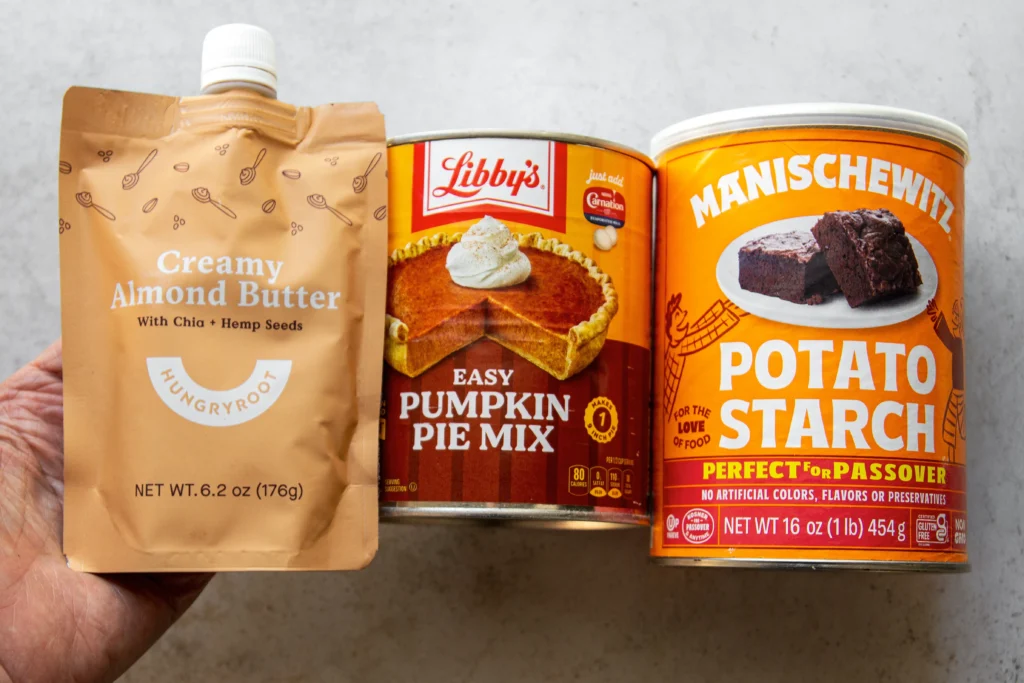
There’s a difference between canned pumpkin purée and pumpkin pie “mix” and most from scratch pie recipes will always point out not to use the pie mix as the cans look similar. Plain purée contains only pumpkin, so you add your own sweetener and spices. Pumpkin pie mix is already sweetened and seasoned, making it a convenient shortcut to making a pumpkin pie. Most bakers prefer using plain puree because they have more control over the final flavor (more or less spice and/or sweetness), but Libby’s has a particularly nice balance of sweetness and spice in my opinion and has been around a long time for a reason. It worked beautifully in my veganized recipe and saved a few steps plus adding and measuring some extra ingredients. For a little history, Libby’s began printing its famous pumpkin pie recipe on their plain canned pumpkin labels in the 1950s, building on a pumpkin canning legacy that dates back to 1929. By the late 1960s, the brand introduced its Pumpkin Pie Mix as a mid-century convenience shortcut, pre-blending the pumpkin with sugar and warm spices so bakers could skip measuring individual seasonings. It traditionally just needed a can of evaporated milk and eggs but to make it vegan, I’ve used the bones of my regular vegan pumpkin pie recipe with a few key adjustments including less plant milk (I used unsweetened creamy coconut milk) and my secret weapon, potato starch.
A Few Ingredient Notes
Pumpkin pie mix: Use a full 30-ounce can of pumpkin pie mix, not plain pumpkin purée. The mix already contains sugar, spices and salt, so you don’t need to add any of those separately. I only tested Libby’s brand but others should work.
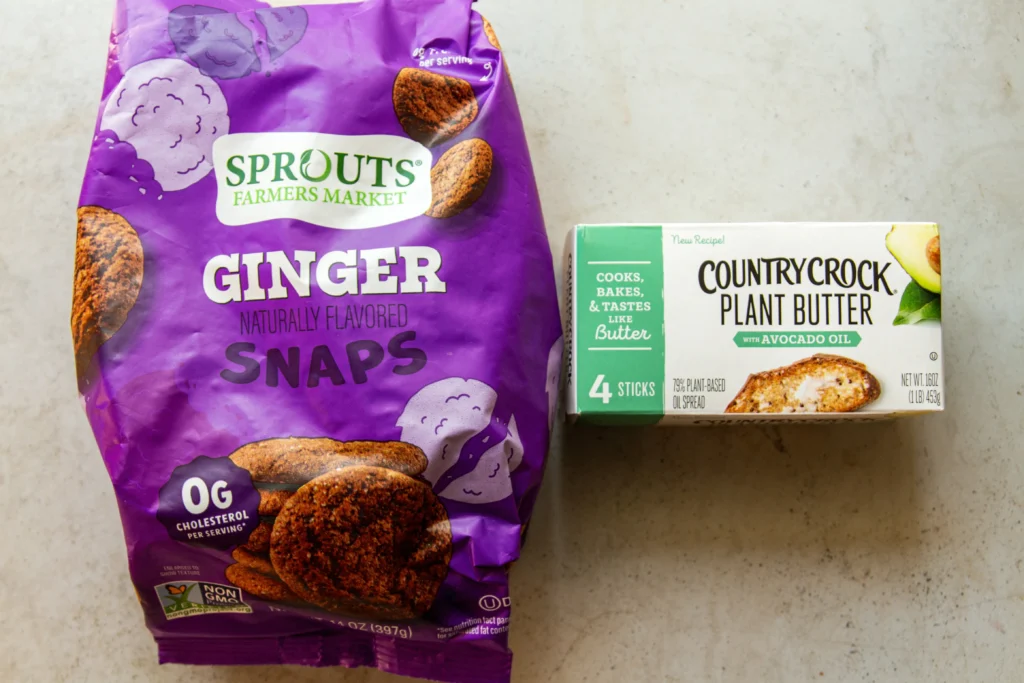
Coconut milk: I used a thick canned unsweetened coconut milk from Whole Foods’ 365 brand but others will work, just choose a full fat version and nothing labeled “lite”. You can also use a vegan heavy cream instead (Califia, Country Crock, Silk and Violife are all good options), but avoid thin coconut milk beverages from a carton, since they don’t provide the same richness. And for the record, I couldn’t taste the coconut in the finished pie.
Almond butter: Just a couple of tablespoons add richness and help give the filling a creamy texture. You could use sunflower butter if allergic or cashew butter. Some have even said they’ve used tahini with success but I tested it and found it skewed the flavor profile so I personally don’t recommend it.
Potato starch: This is what helps the filling set without eggs while keeping the texture smooth and custardy. I recommend sticking with potato starch for this recipe rather than substituting another starch but cornstarch or even arrowroot powder should work but potato is best in my experience.
Gingersnaps: Check the ingredients, since not all brands are vegan (I used Sprouts brand gingersnaps), but you could even use Biscoff speculoos cookies, a pumpkin flavored snap cookie or graham crackers. You’ll generally need about 30 to 35 small cookies to make two cups of crumbs, depending on the brand but crush them first, then measure out.
Tips for Success
Making the pie: The gingersnap crust is pretty easy to make provided you have the right tools. You simply grind the cookies into fine crumbs, stir in the melted vegan butter, and press the mixture firmly into a 9-inch pie plate. I used a food processor for the entire process, and I made the crust, rinsed it out, then made the filling. The filling needs to be blended well so I recommend a food processor or blender. You could crush the cookies by hand in a plastic bag and pulverize with a rolling pin or meat tenderizer but a food processor makes quick work of it.
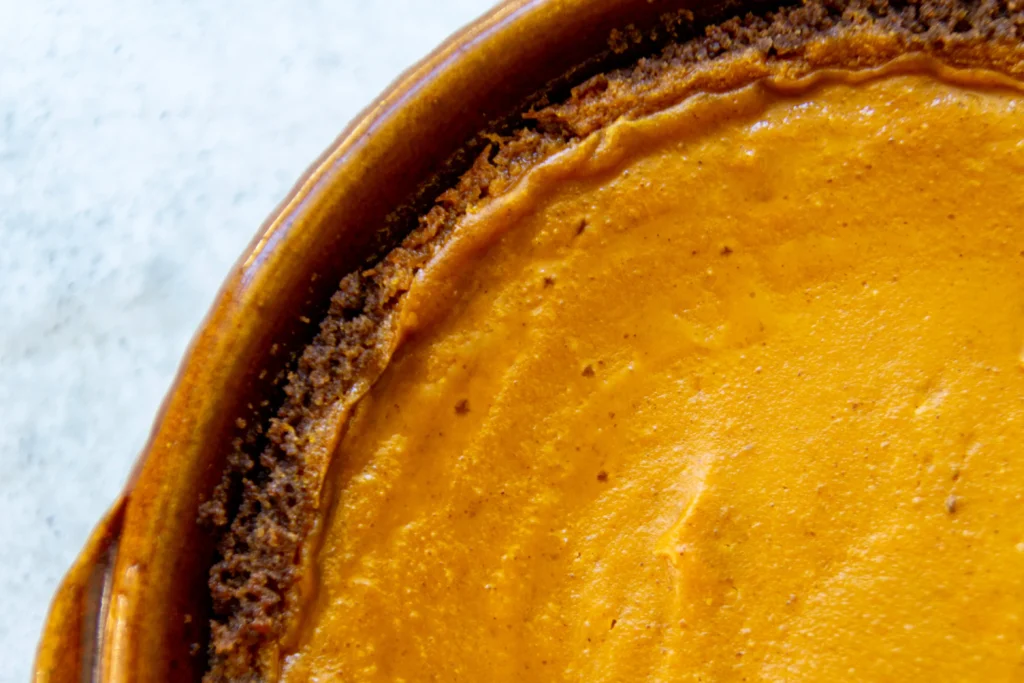
Baking the pie: You need to blend the filling ingredients until completely smooth, then just pour into the crust, and bake at 325°F for about an hour. I usually bake my other pumpkin pie at 350°F, but found a lower and slower bake produced less cracks and a smoother texture overall. All ovens vary so you know yours best so adjust accordingly. I use convection heat so that generally bakes faster. The edges should look set, but the center should still look a little shiny which is what you want. Don’t wait for it to puff up or look completely dry, because the filling will continue to set as it cools. Overbaking can make the texture less creamy so try not to overbake the pie. Let the pie cool completely before covering and refrigerating it for at least a few hours or preferably, overnight. That chilling time makes a big difference when you’re ready to cut clean slices.
Frequently Asked Questions
Yes! If you don’t want to use canned coconut milk, use a vegan heavy whipping cream. Brands like Califia, Violife, Silk and Country Crock make them. If you don’t want to use almond butter, use a sunflower or cashew butter. If you don’t have potato starch (buy some even if it’s only for this recipe is my advice as it really makes all the difference) you could use cornstarch or arrowroot powder.
If you use a gluten-free cookie for the crust, the other ingredients should be gluten-free friendly. Libby’s pumpkin pie mix is certified Kosher Pareve and contains no gluten ingredients, but cross contamination can be an issue for those with celiac disease so do your own homework and don’t assume.
Libby’s is what I tested, but another pre-sweetened and spiced pumpkin pie mix should work. Check that you’re using the same type of product rather than plain pumpkin purée.
I recommend thick canned coconut milk or vegan heavy cream for the richness and consistency they provide. Thin plant milk beverages may make the filling too loose.
The edges should be set, while the center will still look slightly shiny. It doesn’t need to puff up or become completely matte. The filling sets fully as it cools and chills.
Keep the pie covered in the refrigerator for up to four days. I recommend chilling it overnight before serving for the best texture and easiest slicing.
You have to try this pie!
I still love my original vegan pumpkin pie, and it took plenty of testing to get that recipe just right, but I am smitten with this easier version and highly recommend trying it. Even my non-vegan friends said it was amazing, couldn’t tell the difference and scored it 10/10. It’s a great option when you want homemade pumpkin pie without measuring out all the spices and sugar, and I think you might fall in love with it like I have. Please rate and review if you try and check out my other Thanksgiving recipes below!

Easy Vegan Pumpkin Pie with Gingersnap Crust
8
servings15
minutes1
hour1
hour15
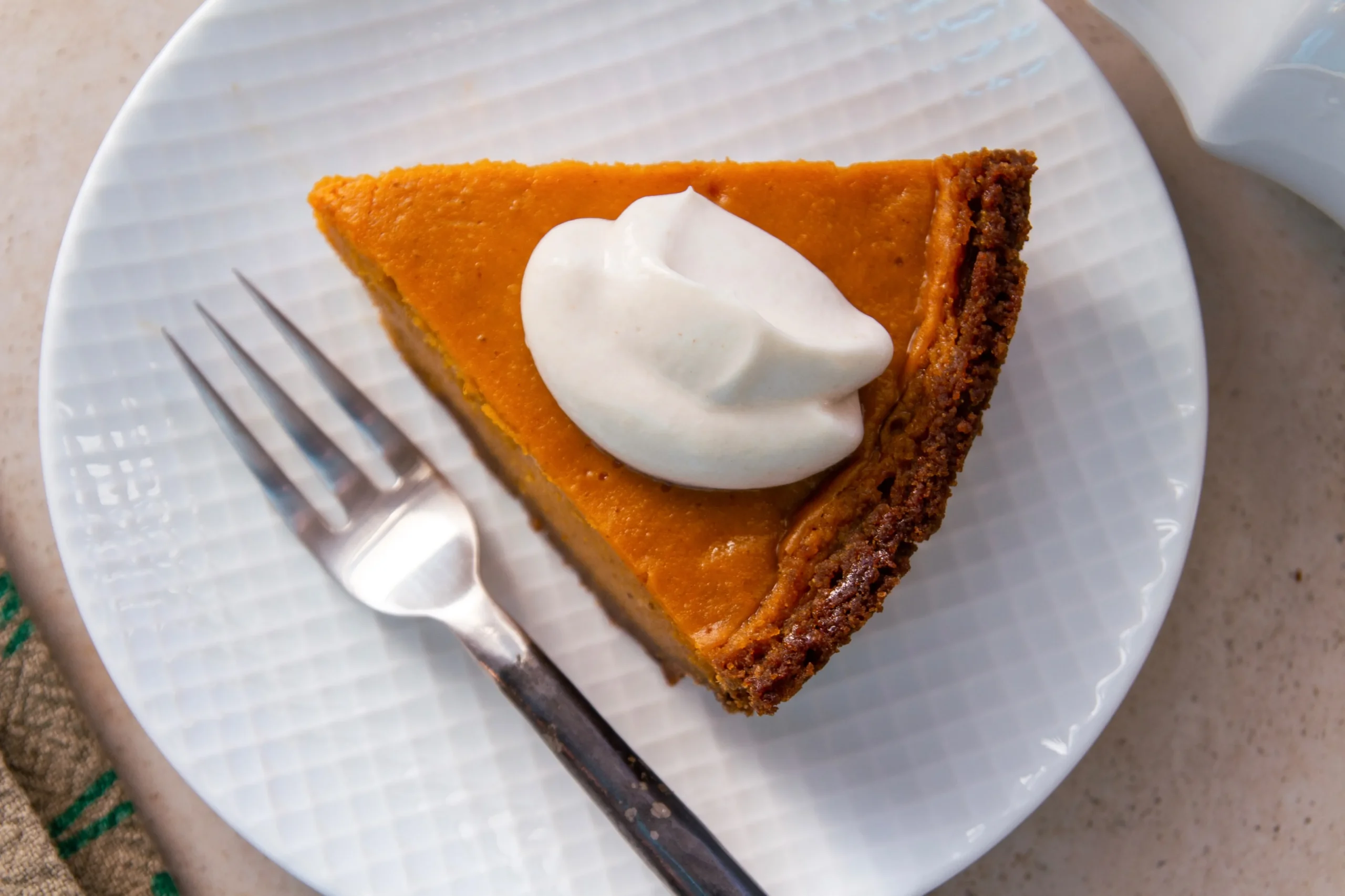
minutesAn easy vegan pumpkin pie with a creamy, perfectly spiced filling made with pumpkin pie mix and a buttery two-ingredient gingersnap crust. No eggs or dairy!
Keep the screen of your device on
Ingredients
- Gingersnap Crust
2 cups 225 g Gingersnap (or similar cookie) crumbs (see notes)
5 tablespoons 5 tablespoons vegan butter, melted
- Pie Filling
1 30 oz can 1 30 oz can Libby’s (or similar brand) Pumpkin Pie Mix
1/2 cup 120 ml thick coconut milk, coconut cream or vegan heavy cream (see notes)
2 tablespoons 2 tablespoons creamy almond butter (see notes)
1/4 cup 40 g potato starch
1 teaspoon 1 teaspoon vanilla extract
Directions
- Preheat our oven to 325°F and prepare the crust. I use a food processor to crush the cookies and measure out two cups, then add the melted vegan butter, mix well, then press into the bottom and sides of a 9″ pie dish. I find using the flat bottom of a glass helps compact it in place but fingers work well for the sides of the dish. It doesn’t need to come all the way up the sides but about 3/4 of the way.
- Make the filling: Place all of the filling ingredients in a food processor or blender and mix well to combine scraping down the sides a few times to make sure everything is mixed well. You want no lumps and smooth filling. Pour into the prepared crust and smooth the top with a spoon or spatula.
- I place the pie dish on a baking sheet for easy removal from the oven and bake for an hour (or longer depending on your oven) until the edges look set, but the center still looks a little shiny. You don’t want the entire pie puffed up as that will mean it’s over-baked. Always start checking sooner than later as all ovens vary. The pie will continue to cook and set once removed from the oven.
- Cool completely, then place wrap over the top and refrigerate for at least two hours or preferably overnight. Slice and serve with vegan whipped cream or ice cream and refrigerate any leftovers.
Notes
- If you can’t find vegan-friendly gingersnaps, you can use Biscoff speculoos style cookies or even graham crackers.
- I used a creamy canned coconut milk and didn’t taste it in the final bake, but you can use vegan heavy cream as well from brands like Califia, Silk, Violife, and Country Crock plant cream. These will impart no coconut and are a better option if allergic.
- I used a creamy almond butter (the Hungryroot brand I used even had added flax and chia) but any creamy natural brand will do. You can even use sunflower or cashew butter or another creamy style. Try not to use the dried bottom of a jar of natural butter. I also don’t recommend using peanut butter or tahini (their flavors are too strong).
- You could substitute cornstarch or arrowroot powder for potato starch, but I feel potato is the best option and most are not allergic to it. It’s fairly inexpensive and lasts a long time stored in the fridge.
Did you make this?
Tag @bigboxveganeats on Instagram and hashtag it #bigboxvegan
Pin this recipe!
Follow @bigboxvegan on Pinterest
Like Big Box Vegan on Facebook!
Follow us on Facebook