
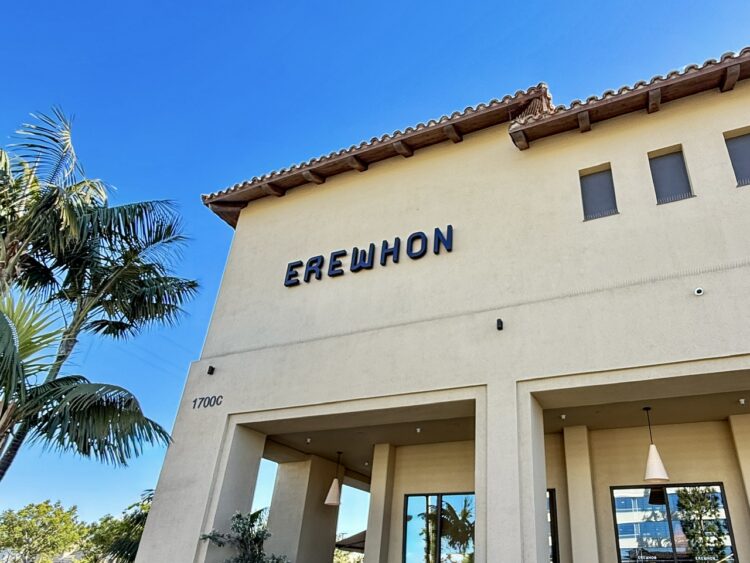
If you follow food trends online, chances are you’ve seen the viral photos: a $20 smoothie, a $15 jar of vegan yogurt, or even a single strawberry selling for nearly $19.
All of them came from one place: Erewhon Market, an upscale California grocery chain. It has become a social-media phenomenon and a symbol of luxury wellness culture. But it raises an obvious question for shoppers especially those buying plant-based foods.
Is Erewhon actually the most expensive grocery store in the United States?
The answer may depend on how you measure it. But when it comes to everyday grocery shopping, and particularly vegan and plant-based foods, Erewhon may be more expensive on average than any other natural food or grocery store and certainly the priciest I’ve ever seen.
From Counterculture Health Store to Luxury Wellness Brand
The roots of Erewhon go back to the natural foods movement of the 1960s.
In 1966, macrobiotic diet advocates Michio and Aveline Kushi opened a small natural foods market in Boston. The store’s name came from the satirical 1872 novel Erewhon, which imagined a utopian society built around health and ethical living.
Like many early health food stores, Erewhon focused on natural products, whole grains, and alternative diets long before organic foods became mainstream. But the modern version of the company emerged in 2011 when it was purchased by Tony Antoci and his wife Josephine. Under their leadership, Erewhon transformed from a traditional health food store into a curated luxury wellness grocery brand.
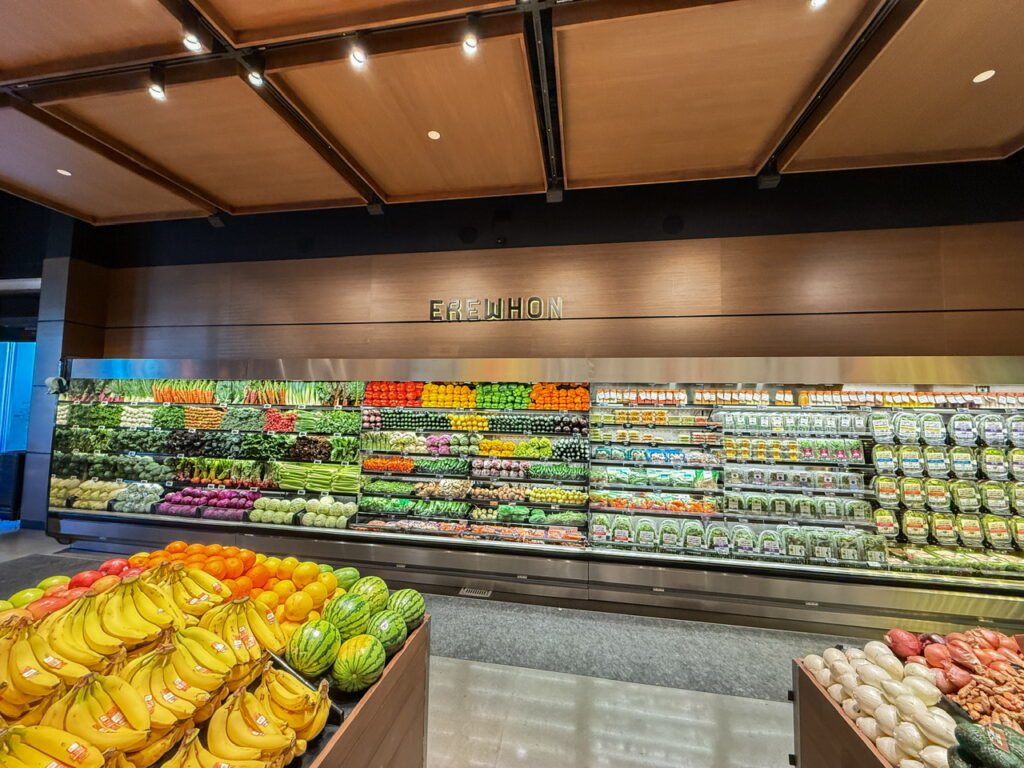
Today the company operates multiple locations across Los Angeles and has become one of the most recognizable upscale grocery retailers in the United States. Technically, Erewhon is a grocery chain since it has multiple California locations under a single brand, but it’s very localized to the more affluent areas of Los Angeles and each store is small, carefully curated, and far from a typical or traditional style grocery store.
A Grocery Store Built Around Wellness Culture
Unlike traditional supermarkets, Erewhon isn’t designed purely for grocery shopping.
Stores function as a hybrid of:
- organic grocery market
- prepared food café
- smoothie and tonic bar
- wellness retail store
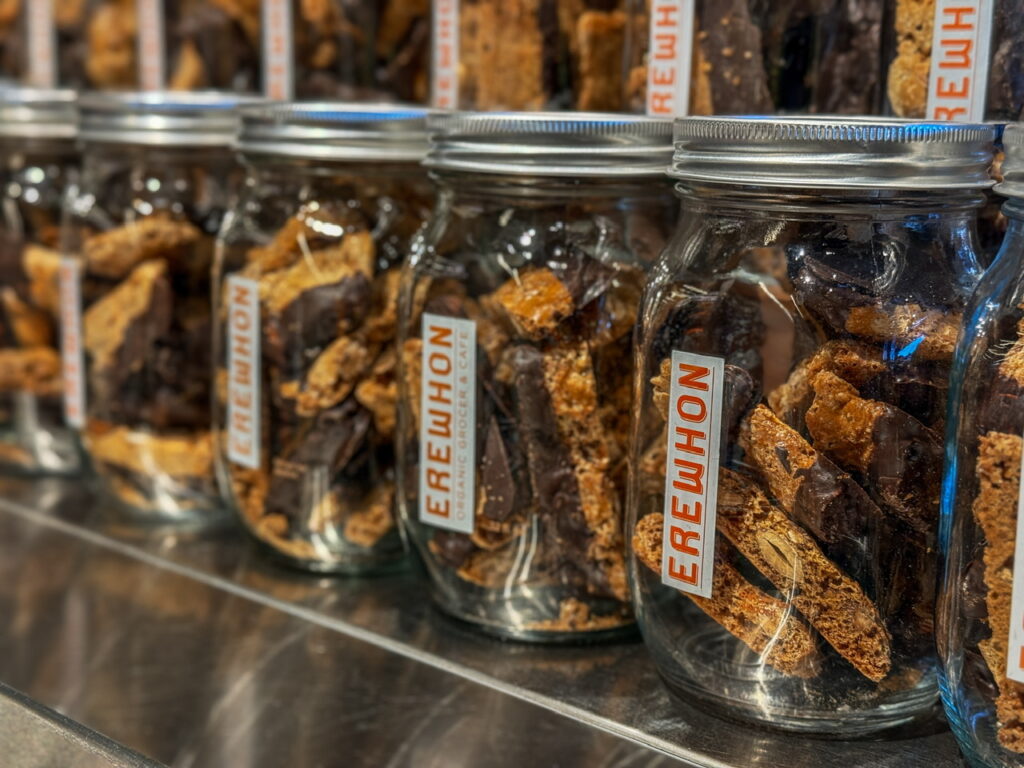
While this sounds like Whole Foods on steroids, they also focus heavily on organic products, supplements, functional beverages, and plant-based foods. Many emerging vegan brands also appear at Erewhon before they often reach more mainstream retailers.
Because of this, the store often functions as a trend incubator for new plant-based products. But it’s also why the store has become famous (or infamous) for its often shocking prices.
Erewhon vs Typical Grocery Store Prices (Vegan Comparison)
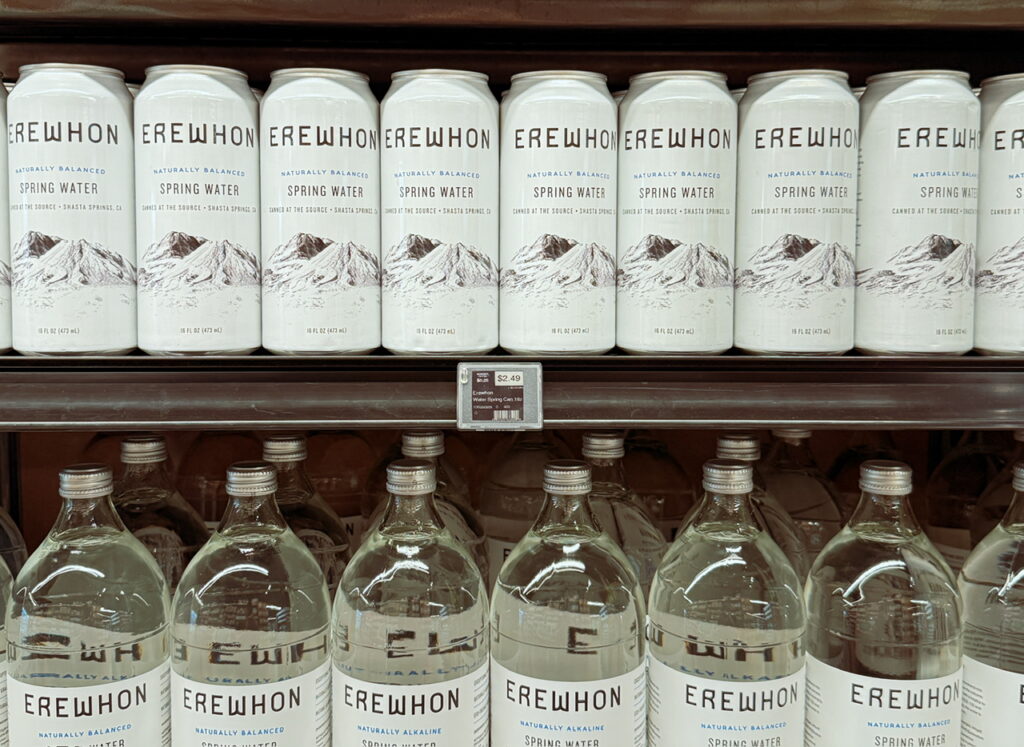
To better understand Erewhon’s reputation for high prices, it helps to compare common vegan products with prices at larger grocery chains such as Whole Foods Market or Sprouts Farmers Market that people already feel lean towards being overpriced.
| Item | At Erewhon | Typically |
| Smoothie | $18-$22 | $7-$10 |
| Luxury Fruit | $18.99 | $3-$5 |
| Vegan Yogurt | $12-$15 | $3-$9 |
| Cold-Pressed Juice | $10-$12 | $5-$7 |
| Nut Milk | $10-$15 | $4-$7 |
| Prepared Foods | $18-$25 | $10-$15 |
| Latte | $12-$14 | $6-$8 |
| Chocolate Bar | $10-$12 | $4-$7 |
| Wellness Shot | $12-$16 | $4-$6 |
| Vegan Dessert | $18-$22 | $6-$10 |
In many cases, Erewhon prices can land two to three times higher than comparable items at typical grocery chains.
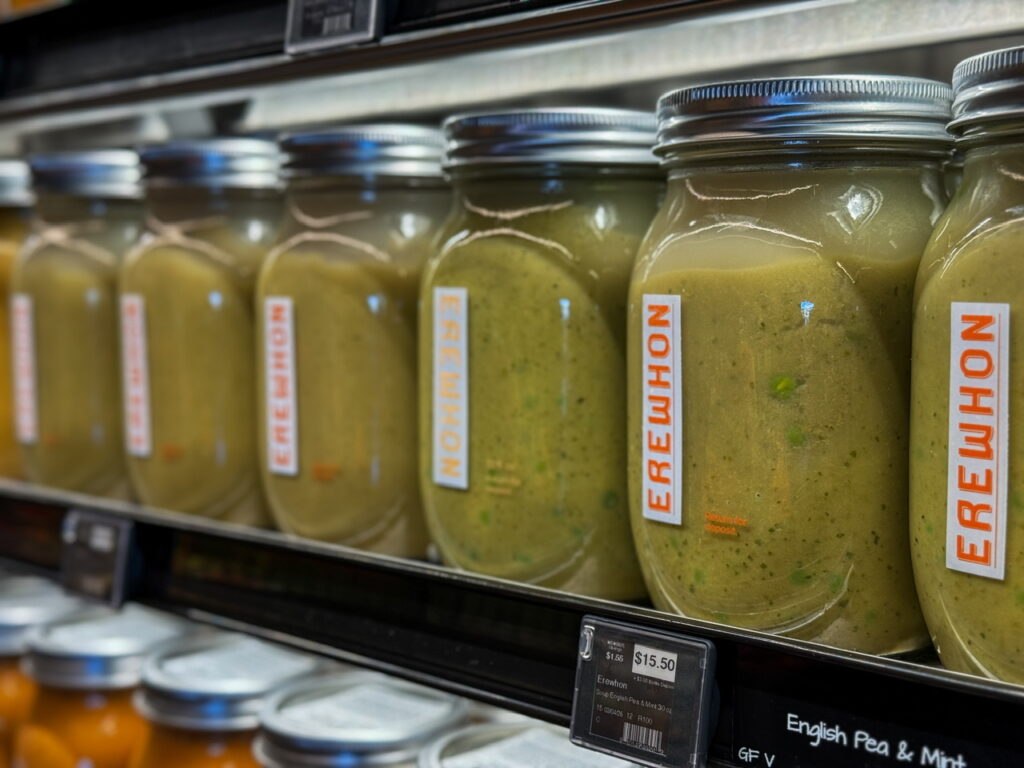
10 Wild Erewhon Prices (Vegan Edition)
- $20 Celebrity Smoothies: The tonic bar at Erewhon Market sells smoothies that regularly cost $18–$22. One of the most famous was the “Strawberry Glaze Skin Smoothie” inspired by Hailey Bieber.
- The $19 Japanese Strawberry: One viral Erewhon item was a single luxury strawberry imported from Japan called the “Tochiaika”, selling for about $18.99. The berry was packaged individually and marketed as a premium fruit experience.
- $15 Vegan Yogurt Jars: Small-batch coconut or nut-based yogurts can run $12–$15 per jar, far higher than the $2–$3 cups commonly sold in most supermarkets.
- $12 Cold-Pressed Juices: Organic juices featuring turmeric, ginger, or greens often sell for $10–$12 per bottle.
- $10–$15 Specialty Nut Milks: Small-batch almond or macadamia milks can sell for $10–$15 per bottle, compared with $4–$6 for brands like Califia Farms or Oatly.
- $18 Plant-Based Prepared Meals: Vegan hot bar items and prepared entrées frequently cost $18–$25 per container.
- $14 Adaptogenic Lattes: Wellness drinks made with ingredients like mushrooms, herbs, and plant milks can reach $12–$14.
- $12 Vegan Chocolate Bars: Craft vegan chocolate brands often sell for $10–$12 per bar.
- $16 Wellness Shots: Tiny bottles featuring ginger, herbs, and sea moss can cost $12–$16 each.
- $20+ Vegan Desserts: Plant-based cakes, cheesecakes, and pastries from Erewhon’s bakery frequently exceed $20 for a single item.
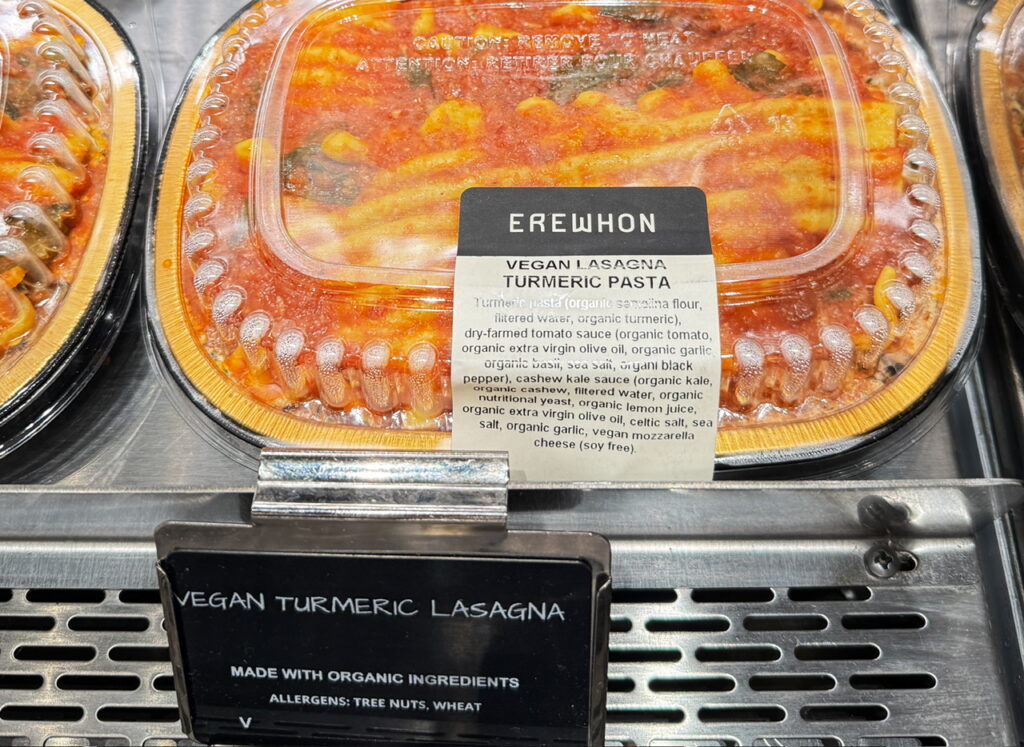
My Personal Experience at Erewhon
During my recent visit to a newer Erewhon that opened near LAX, we picked up a vegan falafel wrap to have on the flight home. The price? $17.
Interestingly, this store is right next door to a Trader Joe’s, where their falafel wrap sells for $5.99. That’s more than $10 less for a similar item.
Was the Erewhon wrap worth it? Honestly, yes. It was delicious and every layer showed it was made with care, and the flavors were deep and robust. Sharing it made the price feel a bit more reasonable, though it’s still significantly higher than the Trader Joe’s alternative but I don’t think I would have enjoyed that one as much.
We also indulged in their coconut soft serve while in the store, an item I saw was made by the brand Cosmic Bliss. It had been featured in a Hailey Bieber sundae a while back that we tried last year that included strawberry and peanut butter sauces and a coconut whipped cream topping, but this was a plain cup and was priced at $9 and we also shared it. While the soft serve was delicious, some in the vegan community have criticized Cosmic Bliss for introducing dairy into their product line as they were a brand that had previously been positioned as fully vegan. Backlash tends to be stronger often in these situations because some feel a sense of moral ownership, whereas non-vegan brands adding vegan options rarely face the same scrutiny.
I also had my eye on a branded Erewhon hoodie. I jokingly guessed the price to be around $80 but was wrong. It was $165. It quickly was put back in the shelf.
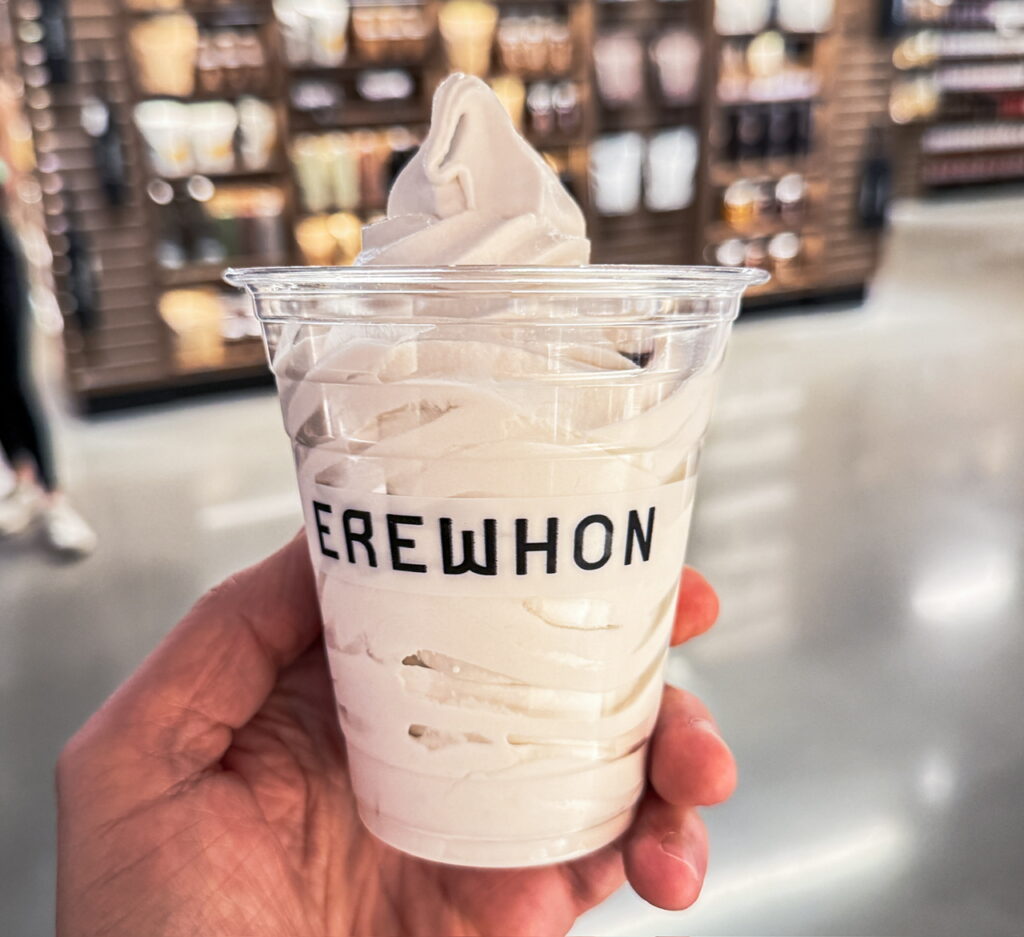
This experience really illustrates the Erewhon model: premium prices for thoughtfully crafted vegan products, with flavors and quality that may justify the cost to some extent, but still a stark reminder of how much more expensive similar items can be compared to a standard grocery competitor. Some might argue that comparing Erewhon to a typical grocery store is a bit like comparing a Michelin-star restaurant to a casual chain but those type of restaurants are out of my wallet’s reach as well.
Does Erewhon Help Vegan Brands, or Make Plant-Based Food Look Elitist?
There’s an interesting paradox when it comes to Erewhon.
On one hand, the store has helped introduce many innovative vegan products to consumers. Being stocked at Erewhon often attracts attention from buyers at larger retailers like Whole Foods Market or Sprouts Farmers Market. In that sense, Erewhon acts almost like a testing ground for emerging plant-based brands.
But there’s also a downside. When the most viral examples of vegan food involve $20 smoothies or luxury wellness drinks, it can reinforce the stereotype that plant-based eating is expensive.
In reality, many vegan staples (beans, grains, tofu, vegetables) are among the most affordable foods in any grocery store but you may not know it from Erewhon’s prices as they tend to elevate these items as well by packaging them in reusable mason jars.
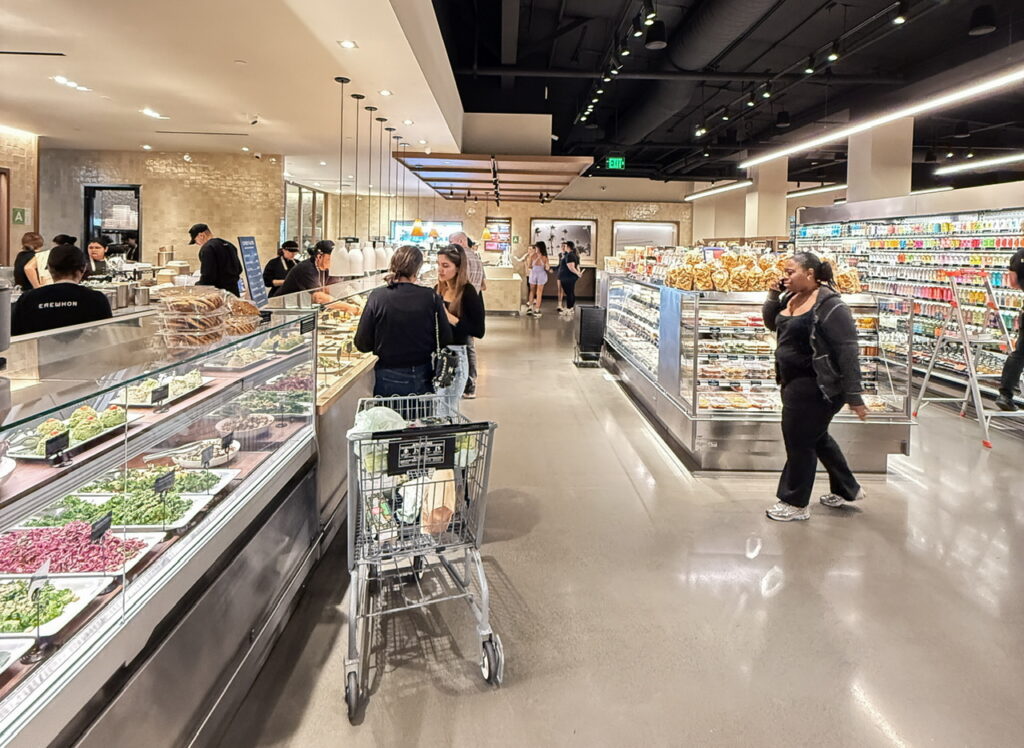
Is Erewhon the Future of Grocery, or a Luxury Outlier?
The bigger question may not be whether Erewhon is expensive. It’s whether its business model represents the future of grocery retail.
Most supermarkets operate on razor thin margins and compete heavily on price. Erewhon takes the opposite approach with smaller stores, highly curated products, and premium pricing.
Rather than trying to be everything to everyone, the brand targets shoppers who see food as part of a broader wellness lifestyle. That strategy has worked remarkably well in affluent areas of Los Angeles.
But it’s unlikely most grocery stores could replicate this model nationwide. Instead, Erewhon may represent something different entirely: the luxury tier of food retail.
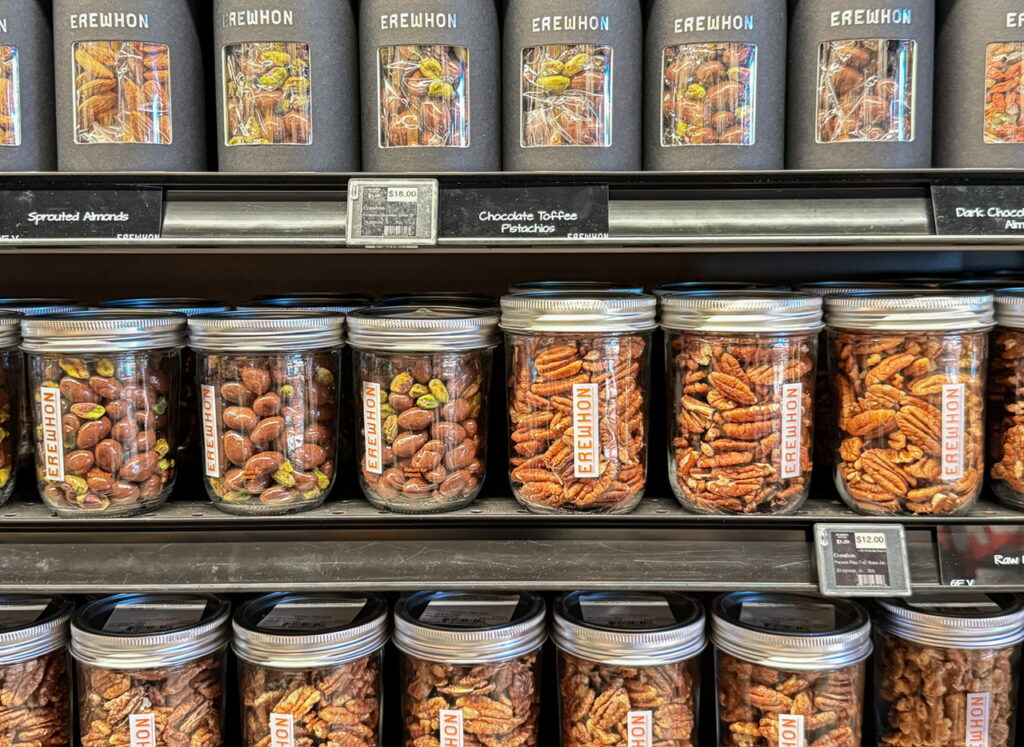
So, Is Erewhon Good or Bad for Vegan Food?
It’s easy to dismiss or laugh at the viral price tags coming out of Erewhon Market. But the reality is more complicated.
Erewhon has helped spotlight innovative plant-based brands and push vegan products further into the mainstream. Many items that appear there eventually reach larger retailers like Whole Foods Market or Sprouts Farmers Market, where they become accessible to far more shoppers.
At the same time, when viral examples of vegan food come with luxury price tags, it can create the impression that plant-based eating is exclusive or elitist. Vegan food can be one of the most affordable ways to eat when built around grains, legumes, vegetables, and simple pantry staples.
But stores like Erewhon represent a completely different version of plant-based culture: one centered on wellness trends, premium ingredients, and lifestyle branding.
So maybe the real question isn’t whether Erewhon is the most expensive grocery store in America.
Maybe it’s this:
Is Erewhon redefining how people see vegan food, or distorting it?
Some may agree more with once stance over the other, but either way, it has undeniably turned grocery shopping into a cultural conversation.
Frequently Asked Questions About Erewhon
While some specialty markets may sell individual items at higher prices, Erewhon is widely considered the most expensive grocery chain in America when looking at its pricing compared to other retailers.
High prices are due to strict organic and ingredient standards, small-batch or boutique brands, wellness-focused items, and the luxury retail experience designed for affluent customers in Los Angeles.
Many items are high-quality, organic, or hard-to-find plant-based products. However, the value depends on whether you prioritize exclusivity and curated wellness experiences versus affordability.
Some popular brands that debut at Erewhon eventually expand to retailers like Whole Foods Market or Sprouts Farmers Market, but limited-edition smoothies, their own private label products and certain luxury items are exclusive to Erewhon stores.
No, but the store has a heavy focus on plant-based and vegan options, which is part of its appeal for health-conscious and wellness-focused shoppers.
In the end, Erewhon may not be a place for everyday shopping for most, and to me, it’s more like grocery theater. I find it fun to try one or two things while I’m on vacation, but I wouldn’t do a full grocery shopping there. The prices are quite high, but the experience can be more about exploring creative, high-quality plant-based foods and enjoying the little surprises you might not find anywhere else. It’s a peek into the high-end side of a luxe lifestyle, so It’s a fascinating place to explore, even if most of us will keep buying our everyday groceries elsewhere.












Crazy
Sprouts is wildly expensive as well, just not Erewhon expensive