
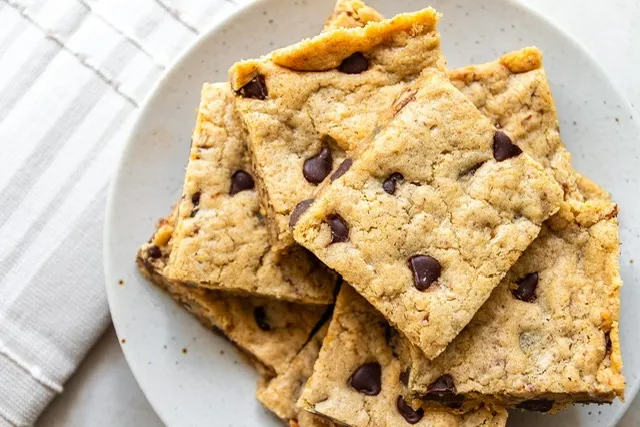
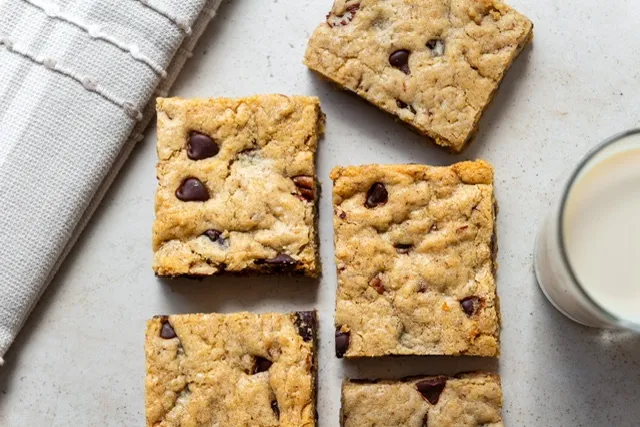
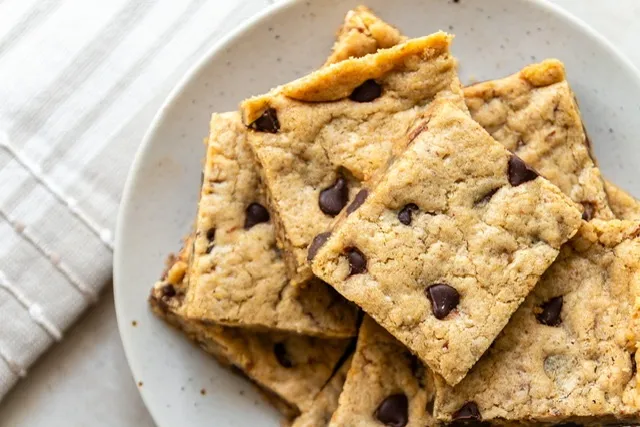
These classic vegan blondies are thick, chewy, and loaded with semisweet chocolate chips and nuts. No eggs, no dairy, and no compromise on texture. If you’ve been searching for the best vegan blondie recipe, then I think this may be the one.
I’ve been baking these for years, but blondies have always been one of those recipes where getting the texture right matters and that can be tricky when making them vegan. Too cakey and you lose the chew. Too dense and they feel gluey. The sweet spot is a slightly crisp edge, a chewy center, and that deep brown-sugar butterscotch flavor that makes a blondie a blondie. I feel my recipe nails it.
My secret weapon here is flax egg made with aquafaba instead of water. Aquafaba (the liquid from a can of chickpeas) is genuinely magical in vegan baking. Combined with flax meal, it mimics an egg far better than plain water and gives these blondies their signature chew. Cans of chickpeas are usually under a dollar, so it’s a cheap upgrade worth making.
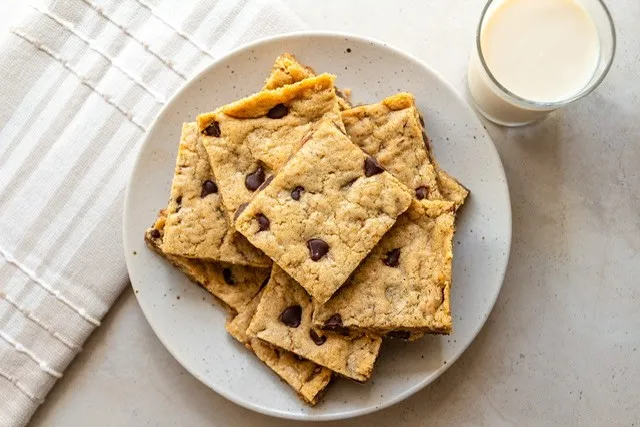
What are Blondies?
Blondies are basically brownies without the chocolate. They get their rich caramel-butterscotch flavor from brown sugar, butter (in this case, vegan), and vanilla. What a lot of people don’t know is that blondies may actually predate chocolate brownies. The first recognizable brownie recipes from the late 19th century got their color from molasses, not cocoa. Chocolate brownies were an early-20th-century development that caught on fast, and the original molasses version eventually became known as a blonde brownie, or blondie. So next time someone asks if blondies are just chocolate chip cookie dough baked in a pan, you can hit them with that history lesson.
There are two dedicated blondie holidays, by the way: January 22 (National Blonde Brownie Day) and May 9 (National Butterscotch Brownie Day). Now you have an excuse to bake twice a year.
Why My Recipe Works
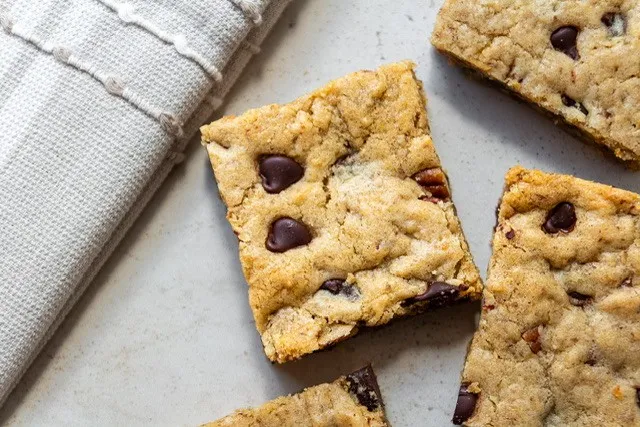
Aquafaba plus flax meal creates a richer egg substitute than water plus flax alone. The rolled oats add subtle texture without making the bars taste like oatmeal cookies. Creaming the vegan butter and sugar together properly is the step most people skip, but it matters for getting that chewy, slightly airy crumb. And cooling them completely before cutting (in the fridge if you can wait) is the difference between clean bakery-style edges and crumbly chaos.
Tips for Perfect Blondies
- Don’t overmix once you add the flour. Overmixing develops gluten and makes the bars tough instead of chewy. Mix just until the dry ingredients disappear.
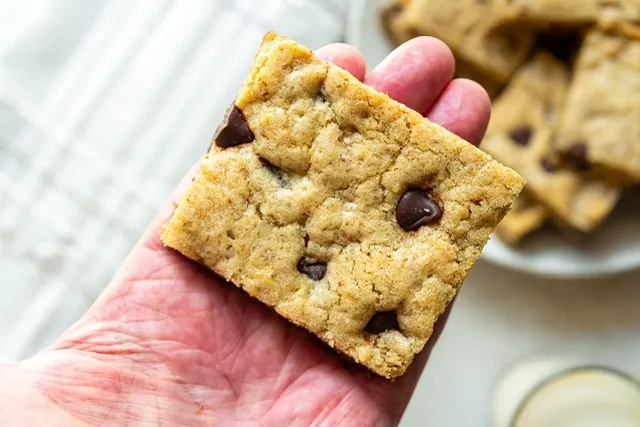
- Cool completely before cutting. Cutting warm blondies gives you a crumbly mess. Pop the pan in the fridge for 30 minutes first, then use a serrated knife for clean edges. If the sides puff up during baking, just trim them off. Those are the cook’s treat.
- Use brown sugar. The molasses in brown sugar is what creates that butterscotch flavor. Don’t swap it out for white sugar. You can use light or dark.
- Room temperature vegan butter creams better. If your butter is cold, the creaming step won’t work properly and you’ll end up with a denser bar.
- Go for unsalted chickpeas when you buy them for aquafaba. The extra sodium from salted varieties can throw off the balance.
Bake at 300 degrees. That’s not a typo.
Most blondie and brownie recipes bake at 350°, but going lower is intentional here. The low-and-slow approach produces a denser, fudgier bar with more uniform texture all the way through, because lower temperatures allow the starches in the flour to gelatinize more slowly instead of the edges setting and pulling away before the center catches up. A lot of bakers use 300° for baking brownies and blondies for exactly this reason. The tradeoff is time, so watch for the visual cues rather than the clock, the top should look dry and set, the edges should be just starting to pull from the pan, and a toothpick in the center should come out with moist crumbs, not wet batter.
Frequently Asked Questions
Yes, but the texture won’t be as chewy. Aquafaba adds structure that plain water can’t fully replicate. If you have a can of chickpeas in the pantry (and you probably should), use the liquid.
It’s a deliberate choice for texture. Lowering the oven temperature slows the bake, which keeps the bars from setting too fast on the outside while the center stays underdone. The result is a denser, fudgier blondie with a more uniform texture from edge to center. It takes a little longer, but that’s the point.
Any stick-style vegan butter works well. Tub-style butters can have higher water content and may affect the texture. Earth Balance and Country Crock plant butter sticks are both reliable.
A 1:1 gluten-free flour blend should work here. The rolled oats already add a little texture, so the swap tends to work better in this recipe than in a standard blondie with only flour.
It’s not there for flavor, you won’t taste it. The lemon juice is doing structural work. This recipe uses baking soda as a leavener, and baking soda needs an acid to activate properly. Lemon juice provides that acid, triggering a chemical reaction that produces carbon dioxide and gives the bars lift and a lighter crumb. It’s the same principle as using vinegar in vegan baking, lemon juice is just a cleaner-tasting option that disappears completely into the batter. Without it, the baking soda would be under-activated and the texture would be noticeably flatter and denser.
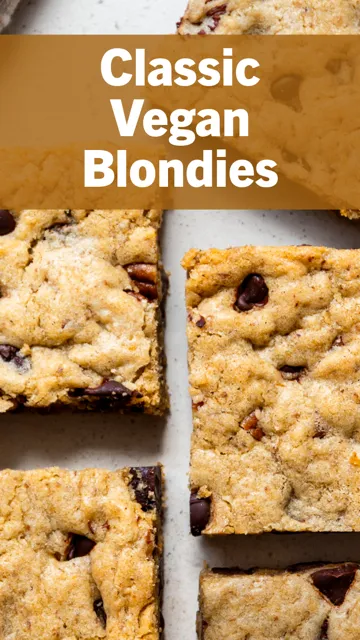
Classic Vegan Blondies
12
servings15
minutes24
minutes0
minutesThe best chewy vegan blondies you’ll ever make!
Keep the screen of your device on
Ingredients
1 cup vegan butter, softened (or two sticks)
3/4 cup plus one tablespoon vegan granulated sugar
3/4 cup light brown sugar, packed
2 tablespoons finely ground flax meal
6 tablespoons aquafaba (liquid from canned chickpeas) or water
2 teaspoons pure vanilla extract
1/4 teaspoon freshly squeezed lemon juice
2 1/4 cups all purpose flour
1/2 cup rolled oats
1 teaspoon baking soda
1 teaspoon Kosher salt
1/4 teaspoon ground cinnamon
1 1/2 cups semisweet chocolate chips
1 cup walnuts, chopped
Directions
- Whisk the flax meal into the aquafaba or water and set aside for five minutes to thicken.
- Cream the vegan butter, sugar and brown sugar in a bowl using a stand or hand mixer on medium speed for about 2 minutes.
- Add flax eggs, vanilla and lemon juice, blending with the mixer on low speed for 30 seconds, then on medium speed for about 2 minutes, or until light and fluffy, scraping down bowl.
- With the mixer on low speed, add the flour, rolled oats, baking soda, salt and cinnamon, blending for about 45 seconds. Don’t overmix. Remove bowl from mixer and stir in chocolate chips and walnuts by hand.
- Preheat your oven to 300°. Grease a 13×9 baking pan and add the batter spreading evenly to all sides of the pan. I find an offset spatula does quick work of this.
- Bake for 25-30 minutes until
just starting to brown and puff up. Don’t over-bake. Cool completely, then cut into squares. - Store blondies in an airtight container at room temperature for up to 3 days, or in the fridge for up to a week. They freeze well for up to 3 months. If freezing, cut them into squares first and layer with parchment paper between pieces. Thaw at room temperature or warm briefly in the microwave.
Notes
- I find the combination of flax and aquafaba ideal as an egg substitute. You can use plain water with the flax as well.
- Feel free to use different chips or nuts but this is the classic combination.
Did you make this?
Tag @bigboxveganeats on Instagram and hashtag it #bigboxvegan
Pin this recipe!
Follow @bigboxvegan on Pinterest
Like Big Box Vegan on Facebook!
Follow us on Facebook











Just took out of oven and of course Bob wanted to try as smell was amazing! They are easy to make and absolutely delicious! What a great way to celebrate Natural Blondie Day, or any day for that mater!
Wow! Thanks so much for the lovely review. I’m so glad you always take the time to not only try my recipes but to rate and review them as well. You both are my top fans and I’m so appreciative. Happy blondie day! 🧡
Pingback: 40 Best Aquafaba Recipes for Amazing Vegan Dishes - Tasty & Healthy Recipes