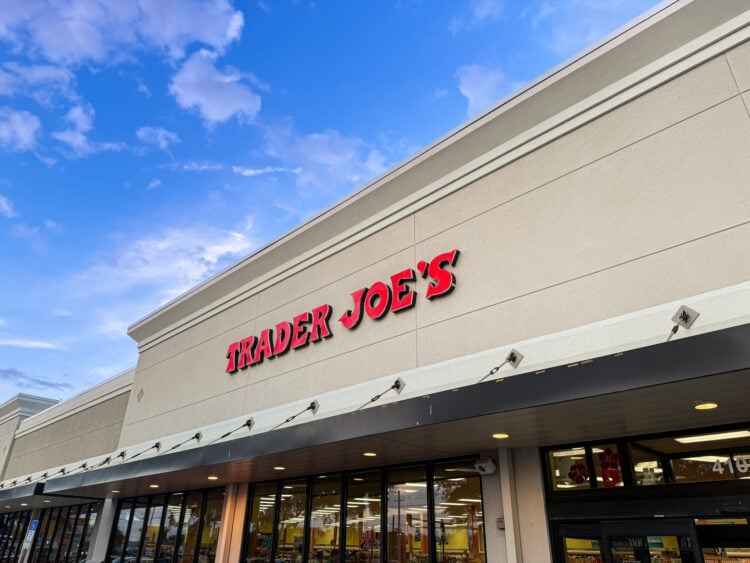
Trader Joe’s has earned its devoted following. The prices are competitive, the products are often creative and good quality, and the shopping experience can be unique. The quirky chain is also a multibillion operation though owned by a reclusive German billionaire family, with business practices that are quite secretive. Here are some things you may or may not know about them and some might surprise you.
Who Actually Owns the Chain?
Most shoppers assume Trader Joe’s is some scrappy American independent and although it may have started that way, those days are long gone. In 1979, Aldi Nord (the German branch of the Albrecht family’s discount grocery empire) purchased Trader Joe’s from founder Joe Coulombe and has maintained ownership ever since.
Here’s where the story gets interesting. The Aldi you probably shop at in the U.S. is actually a different company Aldi Süd, run by a different branch of that same family. The two brothers who built Aldi split their company in 1960, reportedly over a disagreement about whether to sell cigarettes. Karl took southern Germany and the rights to the Aldi brand in the U.S. and Australia. Theo took northern Germany, the rest of Europe, and eventually, Trader Joe’s. They are cousins in the same empire but not the same company, and not run the same.
The Albrecht family has been described by Forbes as “more reclusive than the yeti,” rarely photographed and never making public statements. They let Trader Joe’s run almost entirely independently, which is itself part of why the chain has such a distinct identity.
That hands-off approach gives each Trader Joe’s its unique personality with hand-drawn signage, the personable Fearless Flyer, and private-label branding like “Trader Giotto’s,” “Trader José,” and “Trader Ming’s”. While some find this play on their brand name whimsical, others have criticized the practice for reinforcing cultural stereotypes.
In 2020 a petition called these labels out as exoticizing and culturally insensitive. Trader Joe’s initially defended them, then pivoted and said it would phase them out but I haven’t personally noticed those names changing on products and wonder if they’ve changed their stance yet again. It’s classic Trader Joe’s, secretive and quiet.
Their Marketing Strategy
You may not realize, but Trader Joe’s famously doesn’t advertise. No TV spots, no billboards, no paid influencer campaigns. Instead of spending heavily on advertising, the company creates an experience that customers naturally share with friends and family, generating a cult-like following where customers actively promote the brand through recommendations, online discussions, and social media.
That’s a real and genuinely effective strategy. It’s also a very good deal for Trader Joe’s. Plenty of customers post their favorite finds on social media, and some even have whole accounts dedicated to Trader Joe’s on TikTok, Instagram, and Facebook giving the chain free advertising. That’s worth an enormous amount of money that Trader Joe’s could redirect into pricing and product development but who knows. It may just translate into higher profits for the owners. Their fans are essentially their marketing department and I can’t think of many other grocers that have accomplished this so well.
They Don’t Make Their Own Products and the Questionable Practices of How They May Source Them
Contrary to what some believe, Trader Joe’s doesn’t secretly own factories which make the many items they sell. Like almost every other grocery chain, they work with third-party suppliers to produce their private label products which make up over 80% of what they offer. Some of these could be made by major brands (they never say and swear the brands to secrecy) but some others are sourced in a way that might raise some eyebrows.
They have been accused of creating copycat versions of smaller brand’s products after initially working with them closely. Brooklyn Delhi is the most publicly documented case, but people in the food industry say the pattern is wider than one brand’s story.
Chitra Agrawal founded Brooklyn Delhi in 2014 and created roasted garlic achaar a product that didn’t even exist in the U.S. market before she developed it, using roasted garlic as a deliberate signature twist on traditional raw-garlic preparation. In early 2021, Trader Joe’s reached out to her, she provided samples and wholesale pricing, and then communication went dark. Months later, customers started flooding her inbox saying Trader Joe’s had launched its own “Indian Style Garlic Achaar Sauce” with a similar label design and the same unusual three-A spelling of “achaar” that Agrawal had specifically chosen to help non-Indian shoppers pronounce it correctly. Coincidence? Not likely. After Agrawal posted about it publicly, multiple other smaller food founders reached out to say they’d had similar experiences with them.
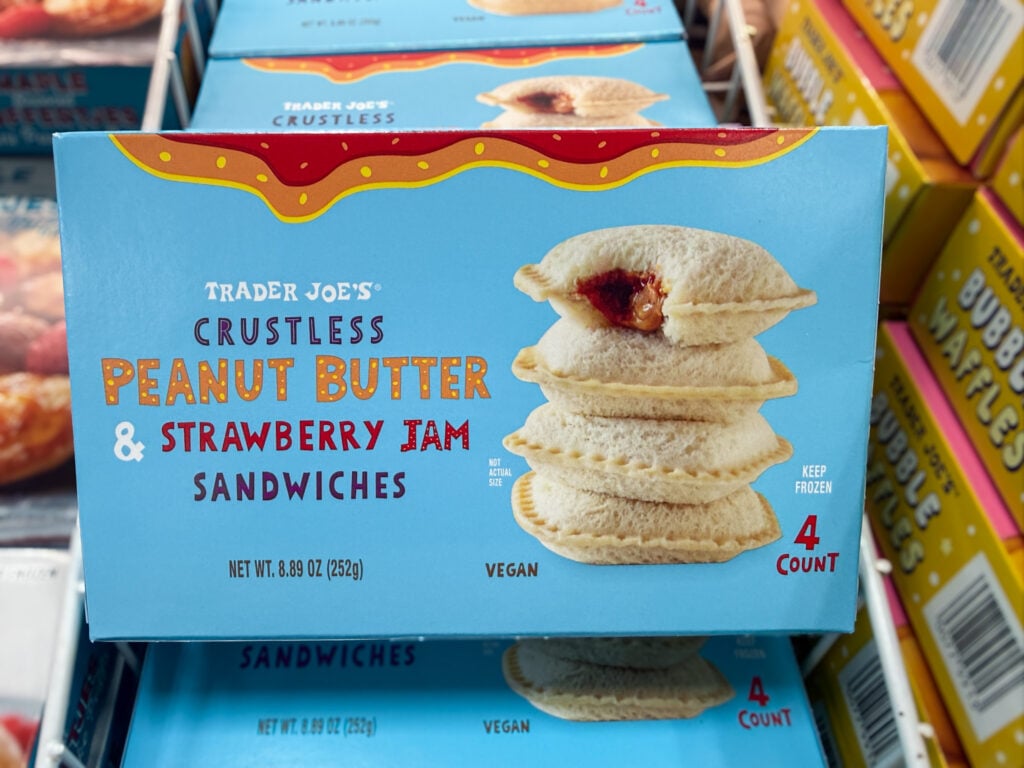
More recently, J.M. Smucker filed a lawsuit against Trader Joe’s alleging that its crustless PB&J sandwiches were an “obvious copycat” of Uncrustables, citing the similar round shape, crimped edges, blue-toned packaging, and even the bite-mark design on the box. The Smucker case involves a corporate giant, not a small brand, but the underlying dynamic is the same: Trader Joe’s private-label model operates at the edges of inspiration and appropriation, and the company’s legal team is extremely capable when it comes to defending itself.
To be fair, product development timelines at major chains are long and experts note that developing a product at a major grocery chain typically takes around two years which makes direct causation hard to prove. But the pattern across multiple founders, multiple categories, and multiple years is hard to ignore.
Why Do Crew Member’s Ask So Many Questions?
If you’ve ever had a crew member ask what you’re planning to make with something at checkout, you’ve experienced one of Trader Joe’s more talked-about social quirks. Half the internet finds it charming. The other half just wants to pay and leave.
Here’s the secret explanation. Unlike most grocery stores where cashiers spend hours at the register, Trader Joe’s crew members rotate through different tasks every hour from checking out customers to stocking shelves to running the sample station to collecting carts. That rotation means when someone gets to the register, they haven’t been doing it for six straight hours. They have energy. The engagement is real but it’s also part of their training. According to accounts, they’re taught to maintain a friendly conversation with customers, including asking about their day or commenting on a product while ringing them up. Genuine? Perhaps yes sometimes, but it’s part of their customer culture and can come off as a bit disingenuous. Pay attention next time you’re checking out if you’ve never noticed.
The Parking Lot Predicament
The Trader Joe’s parking lot has become a reliable source of dark humor online, and for good reason. Many Trader Joe’s locations are decades old and their lots were simply never redesigned for modern traffic. Their original Pasadena store that opened in 1967 still has its original parking lot.
But there’s a strategic dimension beyond age. Trader Joe’s stores average around 10,000 to 15,000 square feet far smaller than a conventional supermarket, and they tend to drop into existing strip malls or urban footprints rather than building large-format destinations. Smaller stores equals smaller lots. The company also grows deliberately rather than aggressively, which means demand consistently outpaces the number of locations. The parking chaos is, in a strange way, proof their model is working.
Why They Often Open Near Other Retailers
This is not a coincidence. When evaluating new locations, Trader Joe’s explicitly factors in the presence of competitors like Whole Foods, Erewhon, Sprouts and others as market signals, using their proximity to identify neighborhoods where shoppers already seek out specialty and organic groceries. They’re not trying to steal others customers outright, they’re identifying zip codes where that kind of shopper already lives, then offering an alternative that delivers comparable quality at significantly lower prices.
Between 1997 and 2014, Zillow found that homes grow in value more rapidly when they’re closer to a Trader Joe’s or Whole Foods, with those homes consistently worth more than the U.S. average. The chain doesn’t just follow affluent neighborhoods, in many cases, it helps create them.
Are They Vexing Vegans?
For plant-based shoppers, Trader Joe’s has always been a mixed bag, exciting in some ways, frustrating in others. And over the past few years, it’s become noticeably harder to do a complete vegan grocery run there. I’ve written about the discontinuation pattern in depth here, but the part that doesn’t get talked about enough is what’s actually disappearing.
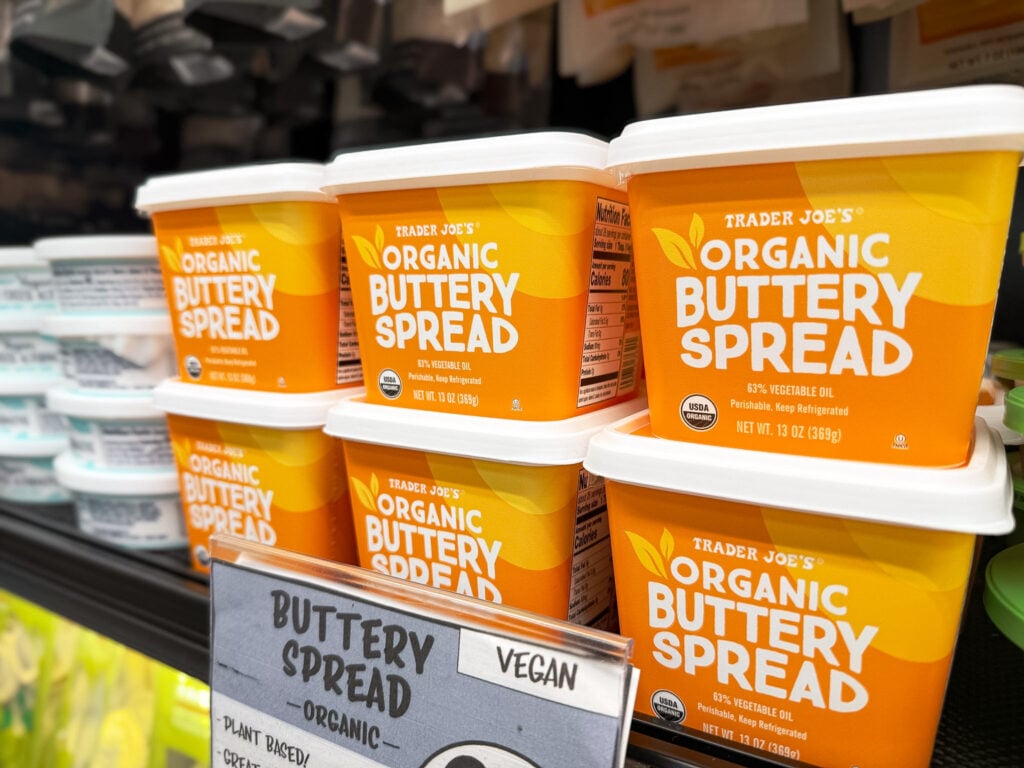
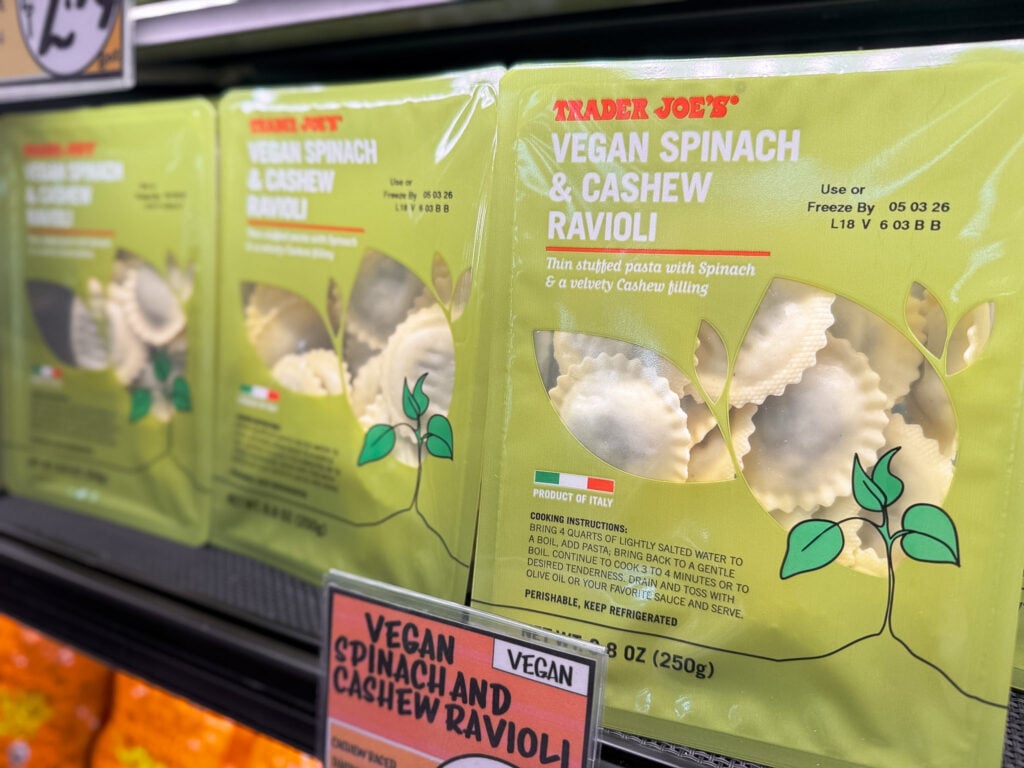
The part that’s vexing a lot of shoppers is not the novelty items or the seasonal splurges, the real losses are things that were basics. The vegan buttery spread, vegan feta, the dairy-free whipping cream and their non-dairy sour cream alternative. These weren’t trend items people bought once for the thrill of it. They were staples, and their disappearance adds up to a shopping experience that’s increasingly hard to complete without supplementing elsewhere and that’s putting a bad taste in a lot of shoppers mouths.
Are the Workers There Happy?
The honest answer, it varies. Part-time crew members reportedly can earn up to $24 per hour, and store captains can make around $100,000 a year, which is meaningfully above most grocery retail averages. The rotation system, small team size, and product-forward culture do create stores where a lot of people genuinely enjoy the work.
But the company’s labor record is more complicated. Starting in 2022, workers at several Trader Joe’s locations voted to unionize, driven by concerns over safety, pay, and benefits that came to a head during the pandemic. As of late 2024, workers at the first unionized store in Hadley, Massachusetts, still had no contract, more than two years after voting to organize. An NLRB administrative law judge ruled that Trader Joe’s had unlawfully prevented workers from wearing union pins ahead of the 2022 vote, finding the sole reason workers were sent home was their protected union activity.
The gap between the cheerful crew member experience and what’s happening in some stores behind the scenes is complicated and worth knowing about.
What’s with the Bells?
On a lighter note, those bells you hear ringing throughout the store may have a specific meaning. Reports say one ring means lines are getting long and someone should come help at checkout. Two rings means a customer has a question. Three rings summons the store captain, their term for the store manager. It’s a simple, low-tech communication system for a chain that has deliberately avoided intercoms, LED signs, and anything else that would break the neighborhood market feel they’ve spent decades building. Everything about Trader Joe’s is more engineered than it looks, including the atmosphere.
Trader Joe’s has earned much of the love it gets. The pricing works, the products often exceed expectations, and the in-store experience is carefully crafted. For a chain owned by one of the most secretive family fortunes in the world, it still manages to feel warm and human. But nothing there is random. Every label, product, and friendly interaction is part of a larger machine, and now that you know some of their secrets, every visit might look a little different than it did through your old rosy lunettes.