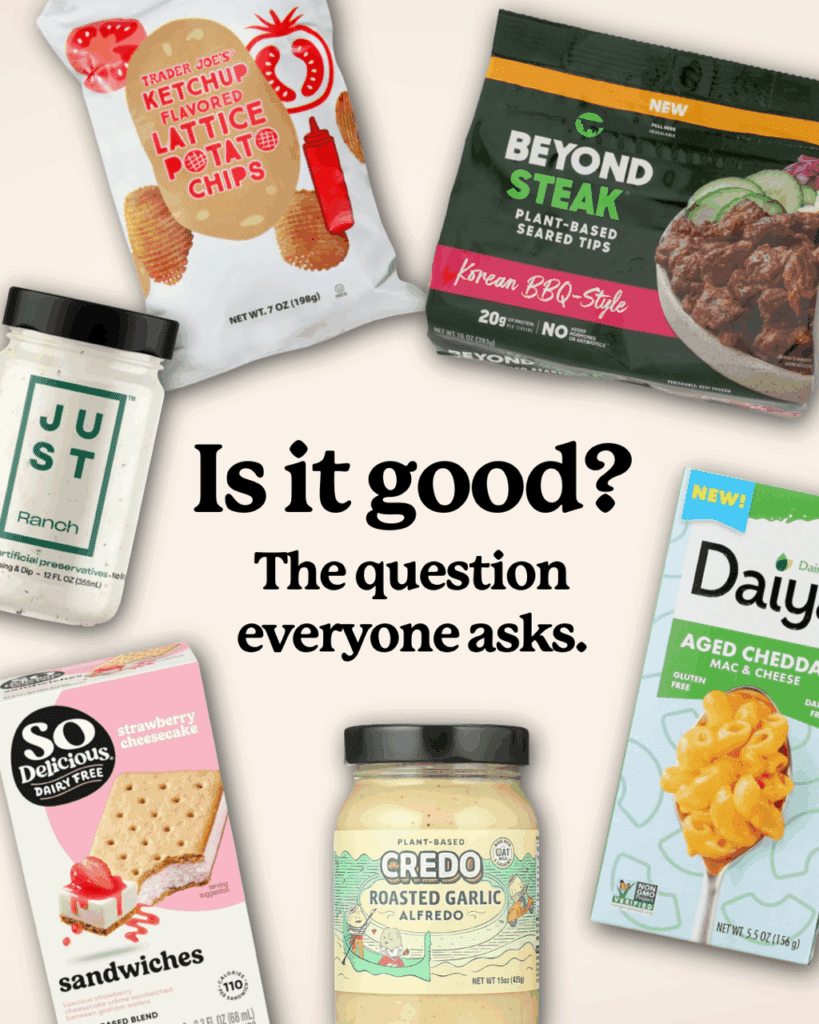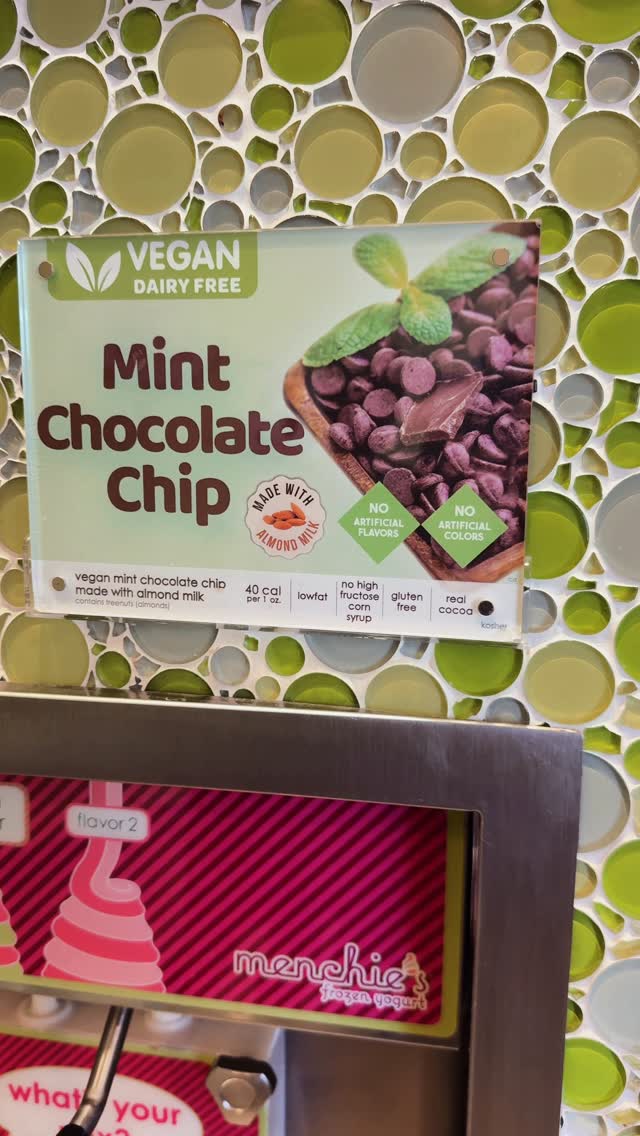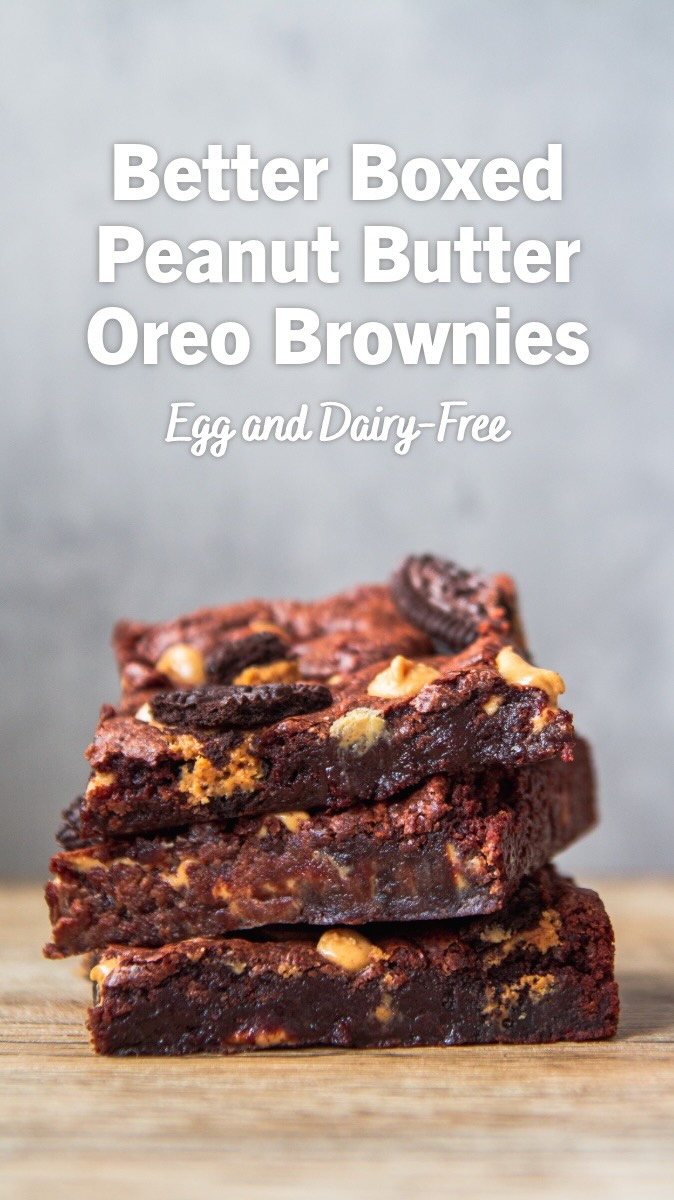

If you’ve ever looked at the comments on my vegan food posts on Instagram or Facebook, or even just chatted with friends about a new plant-based product, you’ve probably heard the most common question of all: “Is it good?”
It sounds simple, but here’s the thing, everyone has their own version of “good.” What I love, you might not. And what tastes bland to me could be your new favorite. Taste is deeply personal, and there’s no one-size-fits-all answer when it comes to vegan food (or any food, really).
Why asking strangers doesn’t always help.
The truth is, a stranger doesn’t know your likes and dislikes. Do you love spicy food? Maybe not. Do you care more about creamy textures than salty flavors? Or are you someone who wants the closest thing possible to the “real” version of a product?
When you ask “is it good?” you’re really asking someone to filter their unique taste preferences through your own, and that often just doesn’t work. Their “yum” could be your “no thanks.”
Reviews have their place but…
I’m not saying reviews aren’t useful. They can give you a sense of:
- Texture — is it creamy, crumbly, chewy?
- Flavor strength — mild or bold?
- Comparison factor — is it close to the original food or something totally new?
- Value — worth the price or not?
Use reviews as a guide, but not as a final verdict.
So who can you trust?
Here’s the tricky part. For almost every vegan product I’ve posted, I’ve often seen as many negative reviews as positive ones. One person raves that a new vegan cheese is the best they’ve ever had, while the next says it’s inedible. Some call a new item “perfect comfort food,” and others swear it’s “bland cardboard.”
So who do you trust? The short answer may be no one completely. Reviews can give you patterns and if 90% of people say something is too salty, that’s probably true. But beyond broad trends, it comes down to your taste buds. The loudest voices online don’t necessarily match your preferences.
Don’t let negative views dissuade you.
One of the pitfalls of asking “is it good?” is that a single negative review can turn you off from trying something altogether. But here’s the reality, someone else’s bad experience might not reflect yours at all.
- That “weird” texture they hated? You might find it comforting or familiar.
- Too salty for them? Just right for you.
- “Didn’t taste like the real thing”? Maybe you don’t even want it to.
If you let someone else’s opinion dissuade you, you might miss out on discovering your new favorite go-to product.
Some stores may have your back.
One big perk that many stores have is a generous return policy if you don’t like something.
- Trader Joe’s, Whole Foods, Sprouts, Kroger, and others often let you return food items even if opened, if they didn’t work out for you.
- Some brands also stand behind their products. If you email or DM them, many will send a replacement coupon to you.
This might make trying new vegan products much less risky but some just don’t like returning items as most stores just throw them away. Some prefer to give things to friends or family rather than returning them or just throwing them away.
Try before you buy?
Feeling like you wasted money is never great but some stores might even let you sample something if you ask or give it to you free to try. Whole Foods and Trader Joe’s allegedly both have a “Try Before You Buy” policy but it’s usually up to the discretion of each store. Never hurts to ask though as you can then sample it before purchasing.
Whole Foods Market openly embraces a “Try Before You Buy” philosophy. Their own shopping tips state that team members can open snack bags, slice fruit, or twist open bottled drinks so customers can sample. They also encourage sampling across departments and accommodating customer requests. I worked there for 14 years and although I was a store artist, I often gave customers a sample or an entirely free product with special stickers we had to put on a product for the cashier to give it to someone for free.
In practice, it works like this: you pick an item you’re curious about, ask an employee politely, and they’ll open or cut a small portion for you. In some cases (especially for perishable items), you might even get a full product to take home to test.
That said, since “open it for you” involves labor, liability, and hygiene, the staff may decline for certain products or during busy times.
Trader Joe’s also has a reputation for a “Try Anything” approach. Many shoppers say that for ready-to-eat items (chips, dips, snacks, salads), crew members will open a package or provide a taste if asked.
Still, it’s not universal. Frozen foods, or sealed large packages are often excluded. Some store employees (especially during busy periods) may say “no” but here’s what you can realistically expect.
- Always ask — no harm in trying.
- Don’t expect every item to be sampleable — items that are difficult to open, pose hygiene risk, or require cooking are usually off-limits.
- Be polite and flexible — staff are doing you a favor.
- If they refuse, don’t let it discourage you — you still have return policies and your own palate evaluation.
- When the policy does apply, it’s one of the best tools in your “try vegan foods” toolkit.
Your taste, your call.
Instead of relying only on strangers’ opinions, think about your own preferences:
- Do you like bold flavors or mild ones?
- Do you want a “dupe” of a non-vegan favorite, or are you open to something completely new?
- Do you care more about taste, nutrition, or price?
The bottom line.
Everyone’s “good” is different. A product one person loves might be one you never buy again. And that’s okay. The only way to know if you’ll love it is to try it for yourself, and thanks to some return policies and supportive brands, there’s little downside to experimenting.
So next time you catch yourself about to ask “is it good?”, remember, good is in the mouth of the beholder. 🌱