
So you’re scanning labels like a pro, spotting milk and eggs from a mile away and then BAM! There it is. A seemingly plant-based product with a mystery ingredient that turns out to be not so vegan.
Welcome to the world of sneaky ingredients, the ones that don’t scream “animal product” but quietly crash the plant-based party anyway. Whether you’re new to vegan grocery sleuthing or just want to double-check your snack stash, here are some common ingredients that aren’t always vegan (and what to look for on labels).
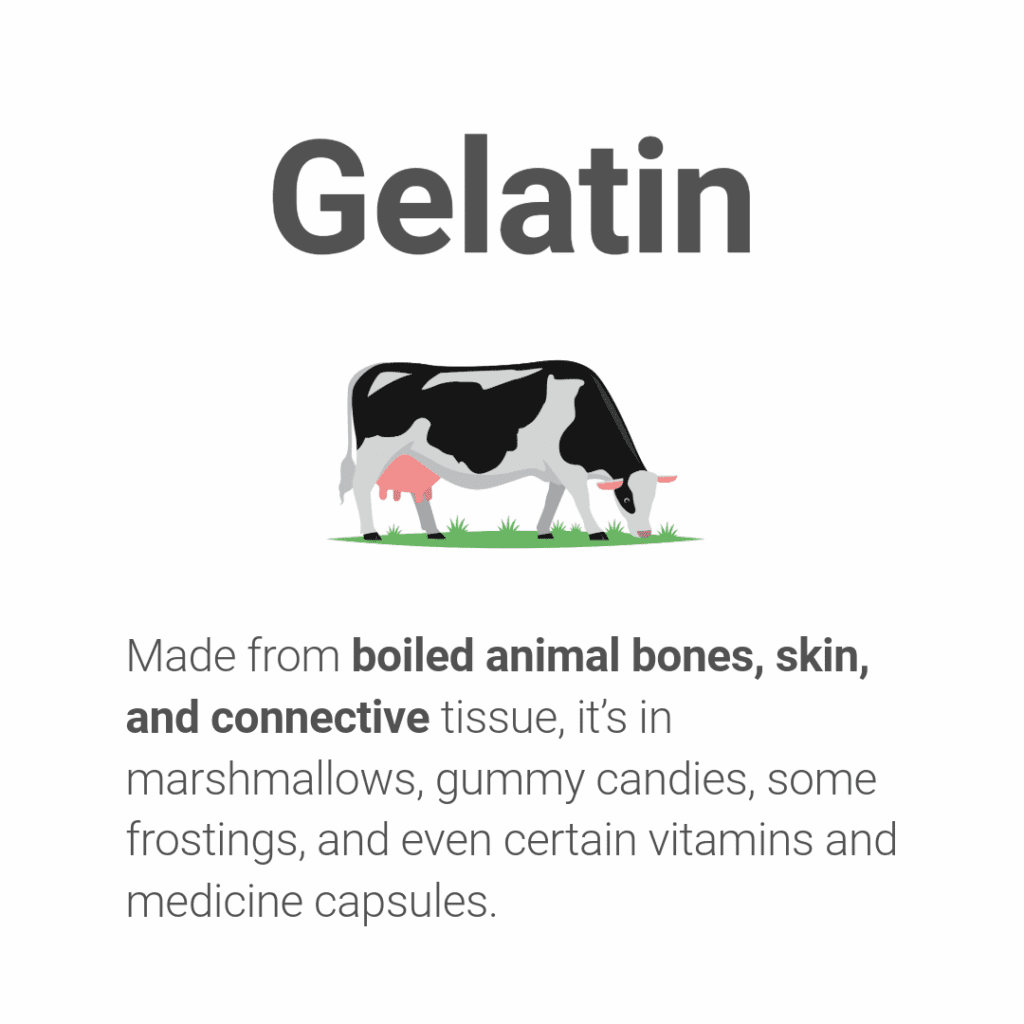
Let’s start with the most infamous of the bunch. Gelatin is found in everything from marshmallows and gummy candies to frosted cereals and most frosted pop tarts. It’s made by boiling the skin, tendons, ligaments, and bones of animals. Yeah, it’s as unappetizing as it sounds.
Watch out for:
- Marshmallows (unless they’re vegan).
- Gummy candy and some fruit snacks.
- Jello, obviously.
- Most frosted pop-tart style toaster pastries.
What to try instead: Look for vegan gelatin alternatives made from agar-agar (a seaweed-derived thickener) or pectin(from fruit).
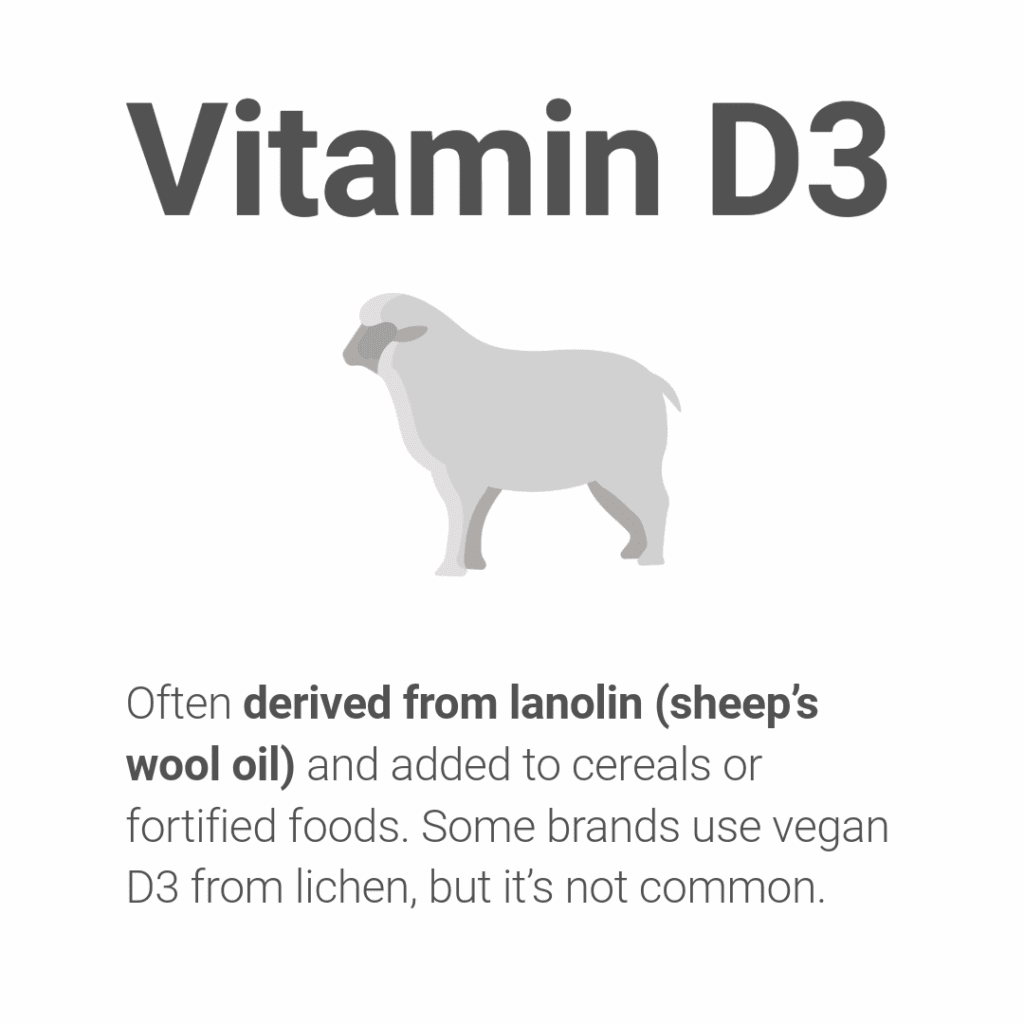
This one’s a bit sneaky because it’s in “healthy” stuff like fortified cereals, some dairy-free butters and supplements. The problem? Vitamin D3 is often derived from lanolin, which comes from sheep’s wool.
Why it matters: Unless labeled vegan, most D3 is not plant-based. D2 is vegan-friendly but not as easily absorbed by the body.
What to look for:
- Lichen-sourced D3, which is vegan and often marked as such on the label.
- Fortified products labeled with “vegan vitamin D.”
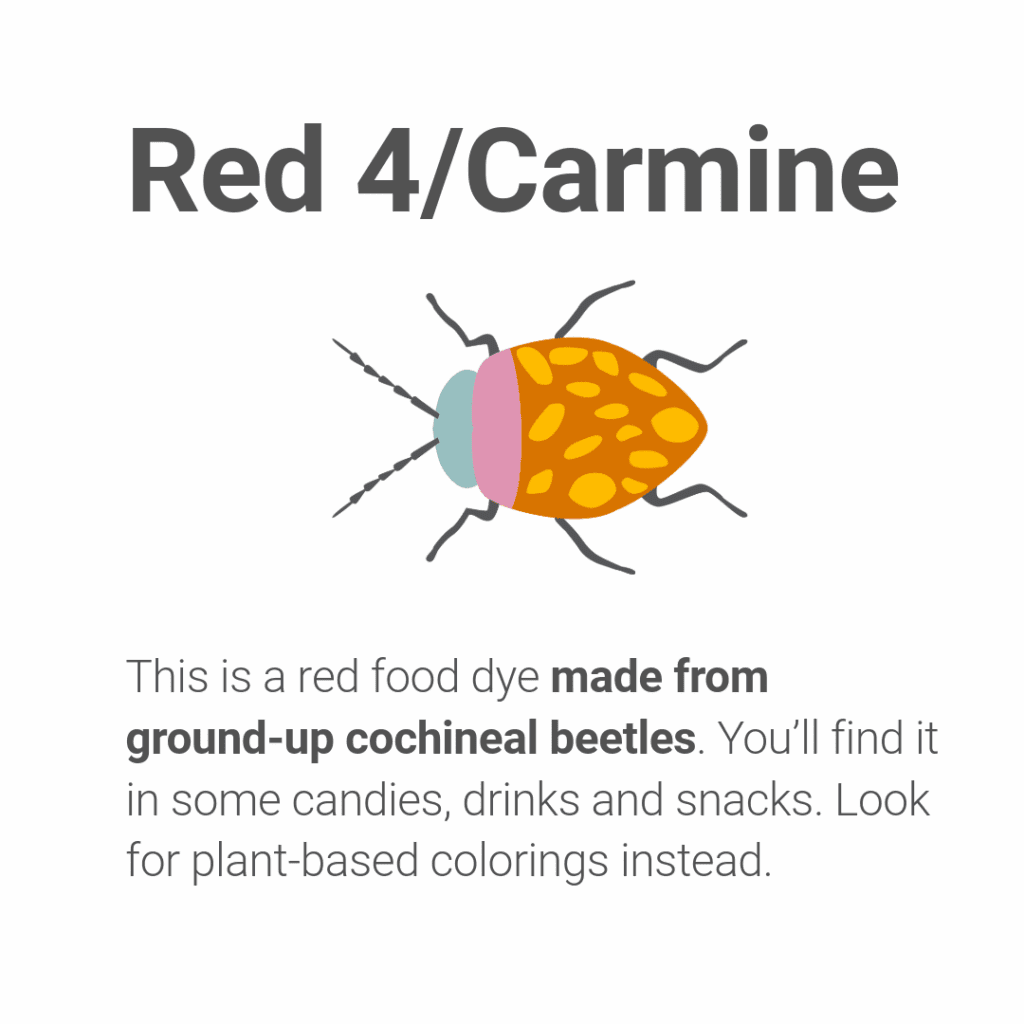
That pretty red or pink hue in candy, juice, and even eyeshadow? It may be carmine, which comes from cochineal beetles. Hundreds of bugs can be used to produce just a few grams of dye. It’s as common as it is creepy and is also called “natural red 4” not to be confused with red 40 which is synthetic.
What to look for instead:
- Plant-based colorings like beet juice, paprika, hibiscus, or annatto.
- Products labeled “vegan” or “no artificial dyes”.
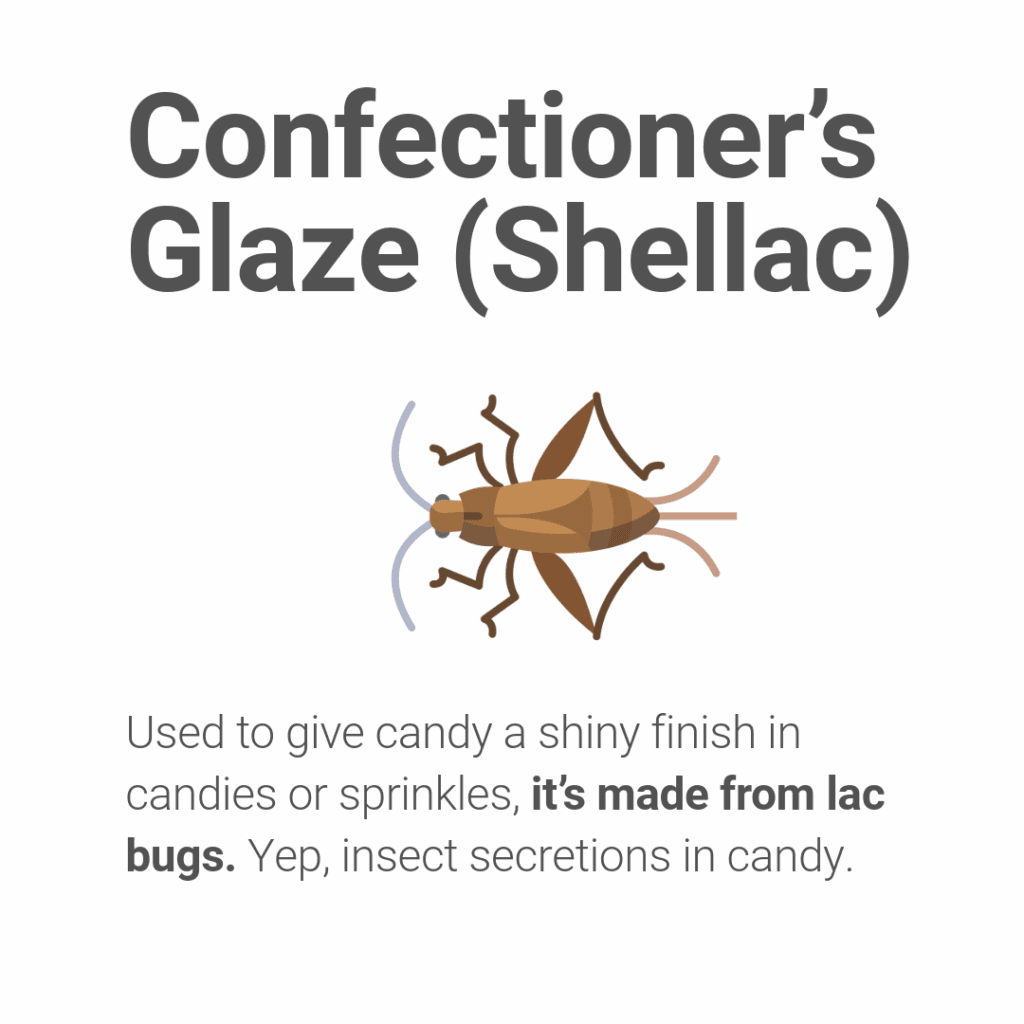
That glossy coating on jelly beans, mints, sprinkles, and even some fruit? That’s shellac, aka confectioner’s glaze, and it’s made from secretions of the lac bug. Not exactly a sweet deal.
What to check for:
- Look for candy labeled vegan or one that uses carnauba wax instead.
- Double-check sprinkles, gum, and decorative treats for shellac or “resin glaze” in the ingredients.
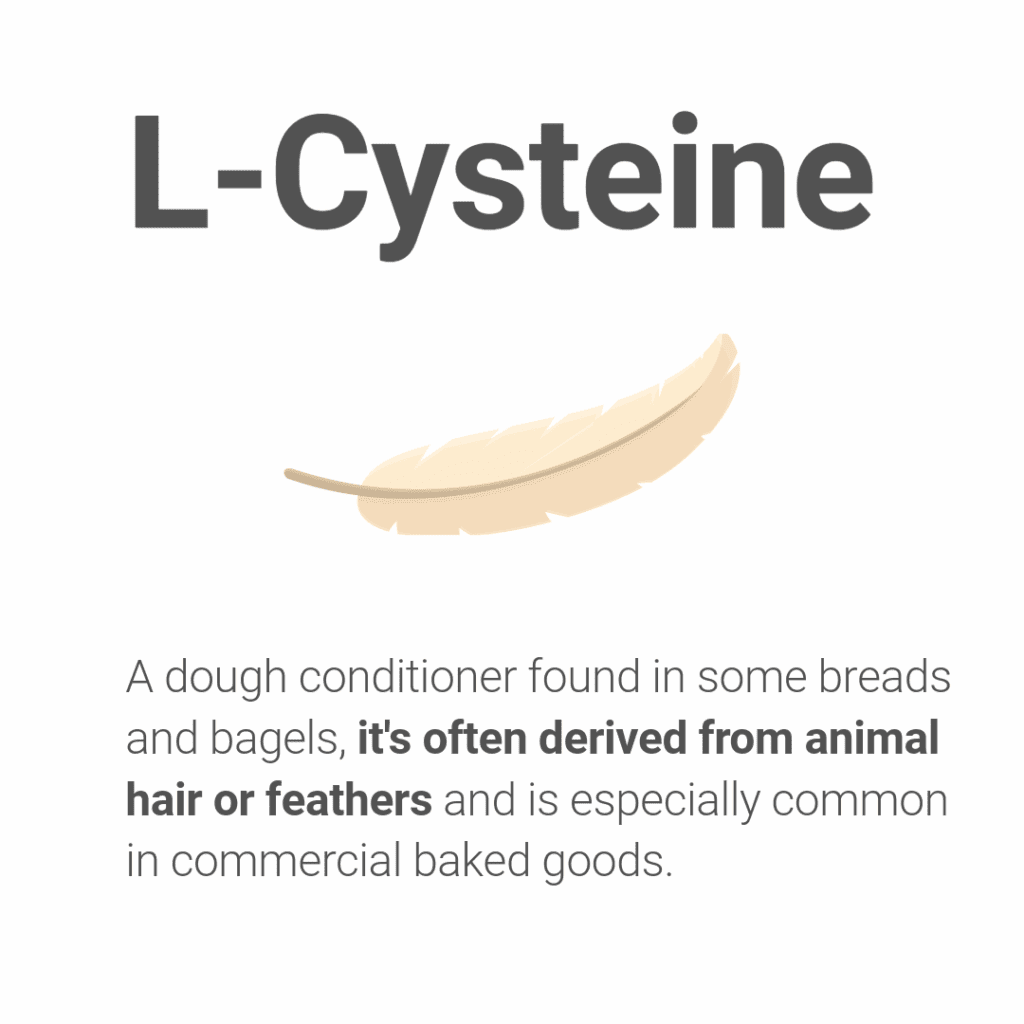
A lesser-known but often-used dough conditioner, L-cysteine is sometimes derived from bird feathers or even human hair (seriously). It helps make bread softer and extend shelf life.
What to look for:
- Breads labeled vegan or made by brands with transparent sourcing.
- Brands like Dave’s Killer Bread, Ezekiel, and Trader Joe’s tend to steer clear.
🛒 Final Thoughts:
The good news? Vegan-friendly alternatives for all of these exist and are being used more frequently, but you need to know where to look (and what to Google). Many brands are getting better at labeling vegan items clearly, but when in doubt, a little ingredient sleuthing can save the day.
If you’re not already following along, I regularly post vegan finds (and label watch alerts!) on my Instagram account @bigboxvegan and this blog so make sure to follow and check often!







Pingback: 10 Popular Foods That Should Already Be Vegan – Big Box Vegan
Pingback: No vegan label? Here’s what that might mean! – Big Box Vegan